- We are open every : MON - SUN : 6:00AM - 7:00 PM
- balidriverandtour12@gmail.com
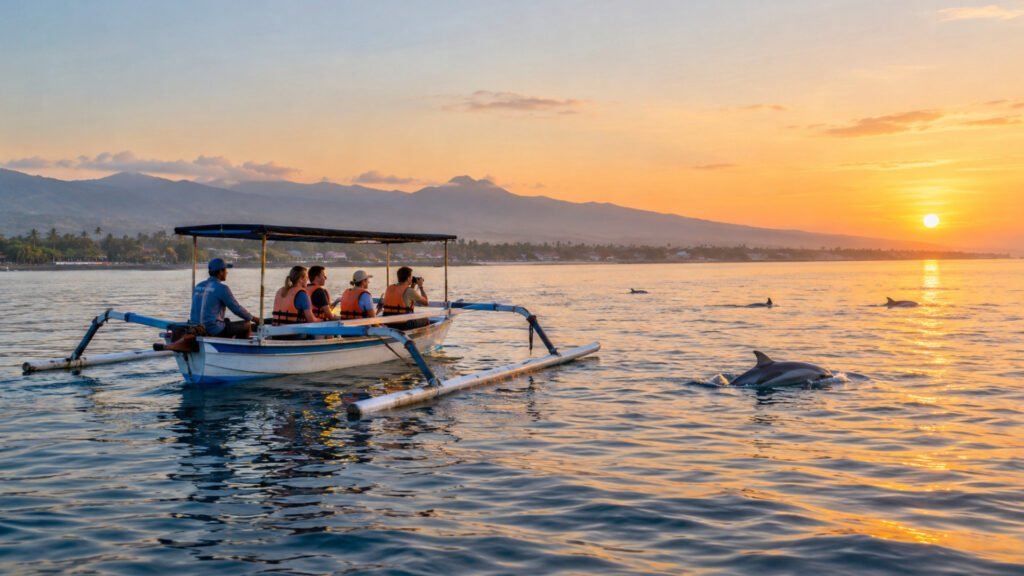
Swimming with dolphins Bali Lovina is one of North Bali‘s most unusual ocean experiences. Instead of visiting a dolphin show or aquarium, travelers can take a traditional boat into the Bali Sea at sunrise and look for wild dolphins in their natural environment.
The important distinction is that this is not a guaranteed dolphin encounter. Wild dolphins choose where they swim, and responsible operators should prioritize observing them without chasing, surrounding, or forcing contact. Some local operators offer open-water swimming experiences, but travelers should carefully check how the activity is conducted before booking.
Lovina is particularly known for early-morning dolphin activity. Indonesia’s official tourism information describes dolphin watching from traditional jukung boats as one of the area’s signature experiences.
If you are considering the experience, this guide explains what actually happens, when to go, how much it can cost, how to get there, and what to look for when choosing a boat.
The experience is quite different from a controlled dolphin encounter.
You normally leave Lovina’s coastline in a small traditional outrigger boat before or around sunrise. The captain searches the surrounding waters for dolphin activity. If dolphins are spotted and the operator offers a swimming component, you may enter the water using snorkeling equipment or hold onto equipment attached to the boat.
However, there is no guarantee that dolphins will swim directly beside you.
Wild animals move according to their own behavior, food sources, weather and sea conditions. A good experience should therefore be viewed as an opportunity to observe wildlife rather than a promise of touching or swimming alongside dolphins.
Some Lovina operators currently advertise open-water swimming experiences, while others focus strictly on dolphin watching.
These are worth treating as two different experiences:
Dolphin watching means staying in the boat and observing dolphins from the surface.
Swimming with dolphins means entering the sea during the encounter, usually with a mask, snorkel and life jacket.
If animal welfare is your priority, dolphin watching from a respectful distance is the safer choice.
Lovina is on Bali’s north coast in Buleleng Regency. The Lovina area stretches across several coastal communities, with Kalibukbuk commonly regarded as its tourism center. The coastline is known for its darker volcanic sand and calmer, more relaxed atmosphere compared with many beaches in southern Bali.
For travelers staying in southern Bali, reaching Lovina is part of the adventure.
Approximate driving times can vary considerably with traffic and road conditions:
These are practical planning estimates rather than fixed travel times. Mountain roads, ceremonies, rain and traffic around central Bali can add significant delays.
Early morning is the key.
Many current operators schedule departures around 5:30–6:00 AM, with some offering later departures depending on their program.
If you want the sunrise experience, arriving at the beach before departure is essential.
A typical trip may look like this:
5:15–5:45 AM: Arrive at the meeting point and prepare.
Around 6:00 AM: Board the boat.
6:00–8:00 AM: Dolphin watching and, where offered, swimming or snorkeling.
Around 8:00 AM: Return toward Lovina.
The exact schedule varies between operators and weather conditions.
For this reason, do not book a hotel far away and expect to reach the beach five minutes before departure.
The best practical window is early morning, particularly around sunrise.
Several local operators currently identify April through October as a favorable period, although this should not be treated as a guarantee.
Bali’s sea conditions can change, and dolphin sightings remain wildlife encounters.
April to October is generally easier for planning outdoor activities because conditions are often more favorable.
However, even during the dry season, rough seas or poor visibility can affect a tour.
November to March can still offer dolphin trips, but travelers should expect a greater possibility of rain, wind and changing sea conditions.
If you are visiting during the rainy season, keep your itinerary flexible and confirm the trip with your operator the evening before.

There is no single official entrance price for swimming with dolphins in Lovina.
Prices depend on whether you choose a shared or private boat and whether swimming, snorkeling, equipment, breakfast or transportation are included.
Current advertised examples include:
These prices can change, so confirm the current price, inclusions and meeting point before paying.
Ask whether your package includes:
Do not compare prices based only on the headline number. A cheaper boat may not include the same equipment or services.
This is the most important part of planning the experience.
Dolphins are wild animals. Responsible tourism should allow them to behave naturally.
Look for operators that:
Some local operators specifically advertise a no chasing/no hunting approach, which is the kind of wildlife philosophy travelers should look for.
If a tour promises guaranteed close contact with wild dolphins, consider that a warning sign rather than a benefit.
Keep your packing simple.
Bring:
Avoid taking large bags onto a small boat.
A waterproof camera can be useful, but remember that early-morning light and moving dolphins make photography difficult.
Do not expect every photograph to look like a professional wildlife photograph.
Dolphins surface quickly and can disappear within seconds.
For better results:
For swimming, do not sacrifice your safety just to get a photograph.
Your best memory may be the experience itself rather than a perfect underwater photograph.
The sea is unpredictable, so safety should come before the dolphin encounter.
Ask your operator about current conditions before entering the water.
You should be comfortable following instructions, wearing a life jacket when required and returning to the boat when instructed.
Dolphin watching can be enjoyable for families, but swimming in open water requires more consideration.
Young children should be supervised closely. Ask the operator about:
If your child is not a confident swimmer, dolphin watching may be a better choice than entering open water.
For senior travelers, the biggest issue may not be the dolphin activity itself but boarding and leaving a small boat.
Ask about the boat’s boarding arrangement and whether assistance is available.
If mobility is limited, a private boat may be more comfortable because you can discuss your needs in advance.
If you are already staying in North Bali, reaching the departure point is easy.
For travelers coming from southern Bali, I recommend arriving in Lovina the evening before.
That is much more comfortable than leaving Seminyak, Kuta or Nusa Dua in the middle of the night.
A Private Driver Bali service is particularly useful if you are combining the dolphin trip with other North Bali attractions because you can arrange an overnight stay and continue sightseeing after breakfast.
If you are driving from Ubud, allow extra time for the mountain roads around central Bali.
Do not plan a tight schedule immediately after the dolphin tour.
If you only have one day in North Bali, combine the dolphin experience with nearby attractions rather than returning immediately to the south.
4:30–5:00 AM
Depart your North Bali hotel or accommodation.
5:30 AM
Arrive at the Lovina meeting point.
6:00–8:00 AM
Dolphin watching and optional swimming/snorkeling, depending on conditions and your chosen operator.
8:00–9:00 AM
Breakfast and shower.
9:30 AM
Continue toward another North Bali attraction.
Late morning
Visit a waterfall, temple or scenic viewpoint.
Lunch
Eat at a local restaurant in North Bali.
Afternoon
Continue sightseeing before returning to your accommodation.
This is considerably more relaxed than trying to combine Lovina with several attractions in southern Bali on the same day.
The dolphin trip works particularly well as part of a North Bali itinerary.
Depending on your route, you can combine it with:
However, do not try to visit all of them in one day.
North Bali looks compact on a map, but winding roads make travel slower than expected.
After years of driving visitors around Bali, one of the biggest mistakes I see is trying to do too much after the dolphin tour.
You have already started your day before sunrise.
Instead, choose two or three meaningful stops.
If you are staying in Ubud or South Bali, consider making Lovina part of a multi-day route through central and North Bali rather than a rushed return trip.
Another useful tip is to check the weather before leaving your hotel. A beautiful forecast in southern Bali does not necessarily mean calm conditions in North Bali.
And if your main goal is dolphins, put the dolphin tour first. Do not treat it as something you can fit in later in the morning.
The dolphin experience is an early-morning activity. Arrive before your scheduled departure.
Wild dolphins cannot be scheduled like a theme-park show.
Check safety equipment, boat type, group size and what is included.
Sea conditions can change quickly.
The dolphin trip already starts very early. Keep the rest of your itinerary realistic.
A responsible encounter should not depend on aggressive pursuit. Choose an operator that respects wildlife behavior.
This experience is best for travelers who:
If you mainly want guaranteed interaction with a dolphin, a controlled dolphin encounter may provide more predictable contact. However, that is a fundamentally different experience from observing wild dolphins in Lovina.
Swimming with dolphins Bali Lovina Can be a memorable part of a North Bali trip, especially when approached as a wildlife experience rather than a guaranteed animal encounter.
The magic of Lovina is the uncertainty: you leave before sunrise, travel quietly across the Bali Sea and wait for wild dolphins to appear.
Choose your operator carefully, prioritize safety, respect the animals and keep your itinerary flexible.
For travelers coming from Ubud, Seminyak, Canggu, Sanur or Nusa Dua, combining the experience with a private driver and North Bali day tour can make the early start and long driving distances much easier to manage.
The most important tip is simple: let the dolphins decide how close the encounter becomes.
Some local operators currently offer open-water swimming experiences with wild dolphins. However, dolphins are wild animals, so close contact is never guaranteed. The activity and approach vary between operators.
Swimming with dolphins Bali Lovina start around sunrise, commonly between approximately 5:30 and 6:00 AM. Exact departure times depend on the operator and sea conditions.
Prices vary widely. Current advertised swimming packages range from roughly IDR 450,000 to IDR 1,000,000 per person with some operators, while more comprehensive packages can cost considerably more. Always confirm the current price and inclusions before booking.
Several local operators currently describe April through October as a favorable period for dolphin trips. However, dolphin sightings depend on natural conditions, so there is no guaranteed month or day.
It depends heavily on how the activity is operated. Travelers should avoid tours that aggressively chase, surround, feed or force interaction with dolphins. A responsible operator should prioritize natural behavior and allow dolphins to determine the encounter.
Dolphin watching can be suitable for families, but open-water swimming requires additional caution. Ask about child-sized life jackets, swimming requirements, sea conditions and supervision before booking.
Yes, especially if you are traveling from southern Bali. Staying nearby allows you to sleep longer and reach the departure point without a middle-of-the-night drive across the island.
Yes. Lovina can be combined with selected North Bali attractions such as Banjar Hot Springs, Brahma Vihara Arama, waterfalls or mountain viewpoints. Keep the itinerary realistic because the dolphin tour starts very early.
Bring swimwear, a towel, sunscreen, waterproof phone protection, a change of clothes and any medication you normally use for motion sickness. Keep luggage to a minimum because boat space can be limited.
No. Dolphins are wild animals and their location changes naturally. Weather, sea conditions and animal behavior can all affect sightings. A reputable tour should explain this rather than promise a guaranteed encounter.

After sending email information to us, we will contact you as soon as possible via email sent directly





balidriverandtour12@gmail.com
+62 812 378 153 55

Bali Driver & Tour – 2024