- We are open every : MON - SUN : 6:00AM - 7:00 PM
- balidriverandtour12@gmail.com
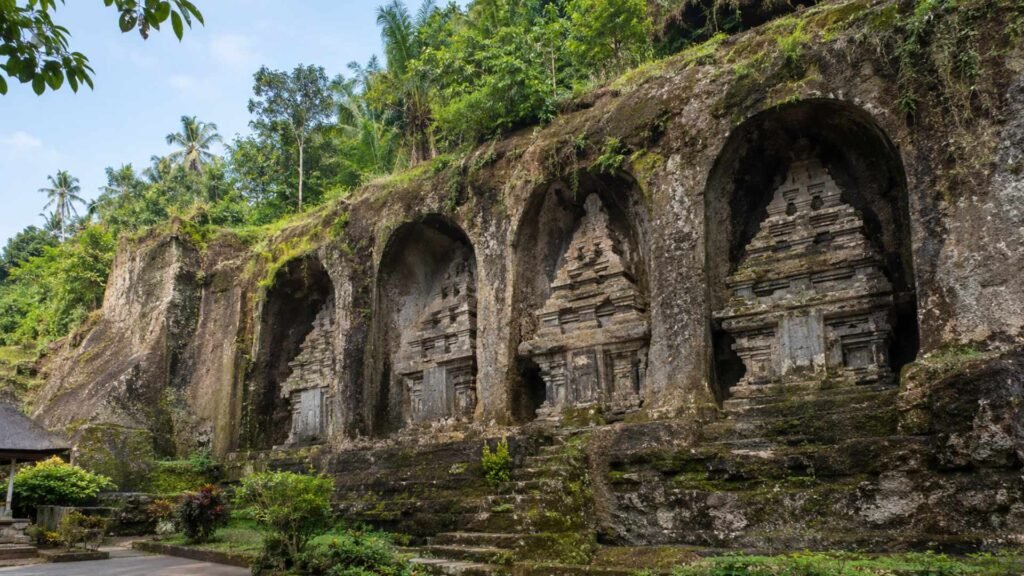
Gunung Kawi Temple Bali offers a glimpse into an older chapter of Balinese history, far removed from the island’s beach resorts and modern tourist districts. Hidden within the green landscape of Tampaksiring, this remarkable archaeological sanctuary is known for its enormous shrines carved into natural stone cliffs and its setting beside the Pakerisan River.
The visit is as much about the journey through the landscape as it is about the monuments themselves. Visitors pass through a traditional entrance, descend a long series of steps, and enter a valley where carved stone structures rise against the surrounding greenery. The atmosphere feels different from that of Bali’s larger, more crowded tourist attractions.
For travelers staying in Ubud, Gunung Kawi is a worthwhile destination for understanding the island’s historical architecture and cultural traditions. However, the visit requires some preparation. The staircase can be tiring, tropical rain can make the path slippery, and the return climb takes more effort than many first-time visitors expect.
This guide explains what makes Gunung Kawi distinctive, what to know before arriving, and how to include the sanctuary in a practical Bali sightseeing itinerary.
Gunung Kawi is an ancient monument complex in Tampaksiring, Gianyar Regency, northeast of Ubud. It is celebrated for its monumental rock-cut shrines, which were carved directly into the cliff faces instead of being assembled from individual building stones.
The complex is often associated with royal memorials from Bali’s early historical period. Its architecture, inscriptions, and location within a fertile river valley provide valuable insight into the island’s artistic and religious heritage.
One feature that makes Gunung Kawi especially memorable is its relationship with the natural landscape. The monuments are not isolated from their surroundings. Stone cliffs, flowing water, tropical vegetation, and agricultural land contribute to the experience of exploring the site.
Visitors should understand that Gunung Kawi is not simply an abandoned archaeological ruin. The location retains religious and cultural significance, so respectful behavior remains important throughout the visit.
It is also different from Gunung Kawi Sebatu Temple, another attraction in the broader region. The two destinations have similar names but offer distinct experiences, making it important to identify the correct location when arranging transport.
Gunung Kawi is generally dated to the 11th century and is traditionally connected with Bali’s royal history during the reign of King Anak Wungsu, whose family belonged to an important dynasty in the island’s past.
The monuments are commonly interpreted as memorial structures associated with members of the royal family. However, the exact identity and intended purpose of every individual shrine should not be presented as definitively established.
The site’s most striking achievement is the way its monumental forms were created from the existing rock. The carved façades give the appearance of large shrines while remaining part of the natural cliff. Their size and intricate outlines demonstrate considerable skill in planning and stone carving.
Imagine the work involved in shaping such structures without modern machinery. The process required careful knowledge of the rock, sustained manual effort, and an understanding of how architectural forms would appear within the surrounding landscape.
The valley also helps explain why the location is significant. Water, fertile land, and the relationship between religious spaces and the natural environment have long played important roles in Balinese cultural life.
Rather than treating the site as a collection of old stones, take time to notice how the monuments are positioned in relation to the cliffs, river, and pathways. This broader perspective makes the visit more meaningful.
Gunung Kawi is situated in the Tampaksiring area of Gianyar Regency, in central Bali. It is commonly visited from Ubud and can be combined with other cultural attractions in the surrounding region.
Approximate driving times from popular visitor areas are:
Ubud town: 30–45 minutes.
Tegallalang: 25–40 minutes.
Sanur: 60–90 minutes.
Seminyak: 90 minutes to 2 hours.
Kuta: 90 minutes to 2 hours or longer during heavy traffic.
These are estimates for planning rather than guaranteed journey times. Traffic, roadworks, ceremonies, weather, and the exact hotel location can all affect the journey.
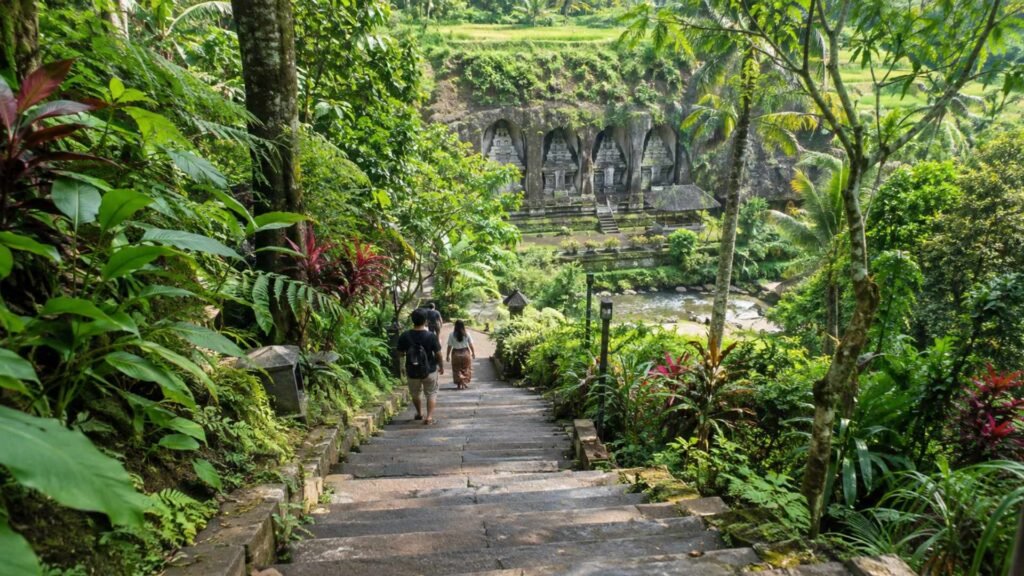
The approach is made by road, but the final part of the visit must be completed on foot. From the entrance, visitors descend into the valley to reach the main monuments. There is no vehicle access directly to the cliffside shrines.
Travelers coming from southern Bali should avoid scheduling the visit too tightly around another activity. Leaving early provides more flexibility if the roads are congested.
The visit begins at the entrance area, where visitors follow the site’s access arrangements and proceed toward the descending pathway.
Small shops and local vendors may operate around the approach. Before starting the walk, check that you have water, your belongings are secure, and your footwear is suitable for stone steps.
Rather than rushing straight toward the monuments, take a moment to prepare for the walk. The staircase is an essential part of reaching the valley, and the return journey requires the same route uphill.
The descent takes visitors away from the entrance area and into a landscape of tropical greenery and cultivated land. As you move lower into the valley, the surroundings become an important part of the experience.
The steps can be uneven, and some sections may become slippery after rainfall. Walk at a comfortable pace and allow other visitors enough room to pass safely.
Travelers who are unfamiliar with Bali’s humid climate should remember that even a shaded walk can feel tiring. Taking short breaks is perfectly reasonable, particularly when visiting with children or older family members.
The carved monuments are the main reason many visitors come to Gunung Kawi. Their scale is easier to appreciate in person than in a photograph, especially when you can see the cliff face surrounding each carved structure.
Observe the outlines, weathered stone surfaces, and architectural details. The monuments have a different visual character from conventional temples built with separate blocks, and this distinction is central to understanding the site.
The complex contains several groups of prominent shrines arranged around the valley. Follow the designated visitor paths and avoid entering areas that are restricted or being used for religious purposes.
The river contributes to the character of Gunung Kawi, creating a natural setting around the ancient monuments. Its presence also helps distinguish the location from Bali’s more familiar temples overlooking beaches, lakes, or open mountain viewpoints.
The surrounding vegetation can provide attractive photographic framing, particularly when the light is soft. However, riverbanks and stone surfaces may be slippery, so do not move into unsafe areas simply to obtain a closer photograph.
One of the most important details to remember is that the visit ends with an uphill climb back to the entrance.
Visitors who descend quickly may underestimate the effort required to return. Keep enough energy for the ascent, drink water when needed, and avoid rushing if the steps are wet.
If you are traveling with someone who has difficulty with stairs, discuss the physical demands before beginning the visit rather than discovering the challenge halfway down.
Morning is generally a good choice for visiting Gunung Kawi. Temperatures are often more comfortable, and an early start leaves room for other attractions without forcing you to rush through the sanctuary.
Arriving earlier in the day may also help you enjoy the setting before visitor activity increases. Exact crowd levels vary by season, day of the week, and local events.
Bali’s dry season usually runs from around April to October, although showers remain possible. When the weather is dry, walking conditions may be more comfortable, and there is often a better opportunity to explore the valley without rain interrupting the visit.
Bring sun protection for exposed sections of the approach, but remember that the shaded staircase and humid valley can still feel warm.
The wetter period generally falls between November and March, though local conditions vary.
Rain can make the steps and stone pathways slippery. If there is heavy rainfall, take extra care and follow any instructions from site staff. Postpone the visit if conditions make the descent unsafe.
Cloudy weather can create soft light around the monuments, but safety matters more than photography. Avoid walking close to unstable edges or entering restricted areas to find a better viewpoint.
Gunung Kawi is a managed visitor attraction, and visitors should expect to pay an entrance fee. The applicable price and opening schedule can change, so check the latest information before leaving your hotel.
When confirming the details, check:
The current entrance price for your visitor category.
The operating hours on your intended travel date.
Whether temporary restrictions or religious ceremonies could affect access.
Any current requirements for temple clothing or coverings.
Carry some Indonesian rupiah for small purchases and incidental expenses. Payment methods can vary among local businesses, so do not assume that every vendor accepts cards.
Although Gunung Kawi attracts visitors interested in history and architecture, it remains a culturally significant site. Appropriate clothing and respectful conduct are essential.
Wear clothing that covers your shoulders and provides suitable coverage for your legs. Follow the current rules concerning sarongs or other temple coverings at the entrance.
Keep your voice low around people praying, and never climb onto the carved monuments. Avoid touching fragile surfaces unnecessarily, leaving rubbish, or blocking pathways for photographs.
If a religious ceremony is taking place, give participants space and follow any instructions from temple staff. Ask permission before photographing local people, particularly during worship.
These small considerations help protect the atmosphere of the sanctuary and allow visitors to appreciate the site without disturbing its cultural role.
Gunung Kawi offers opportunities for architectural, landscape, and cultural photography. You do not need professional equipment to capture its character.
Focus on scale. Include some of the surrounding cliff or vegetation to show how large the carved shrines are.
Look for natural framing. Trees and other plants can create depth around the stone architecture without distracting from the monuments.
Choose your timing carefully. Morning light can be helpful, although the best conditions depend on cloud cover and the direction of the sunlight.
Protect your equipment. Humidity and rain can affect cameras and phones. Keep electronics secure while walking and avoid handling them on slippery steps.
Respect the site. Do not climb onto monuments, cross barriers, or stand in restricted areas for a photograph.
A phone camera is sufficient for most visitors. The most memorable photographs often come from paying attention to the relationship between the carvings and the valley rather than trying to capture every detail.
Gunung Kawi fits naturally into a cultural sightseeing day from Ubud. Rather than combining it with too many distant destinations, select a few nearby places that complement its history and landscape.
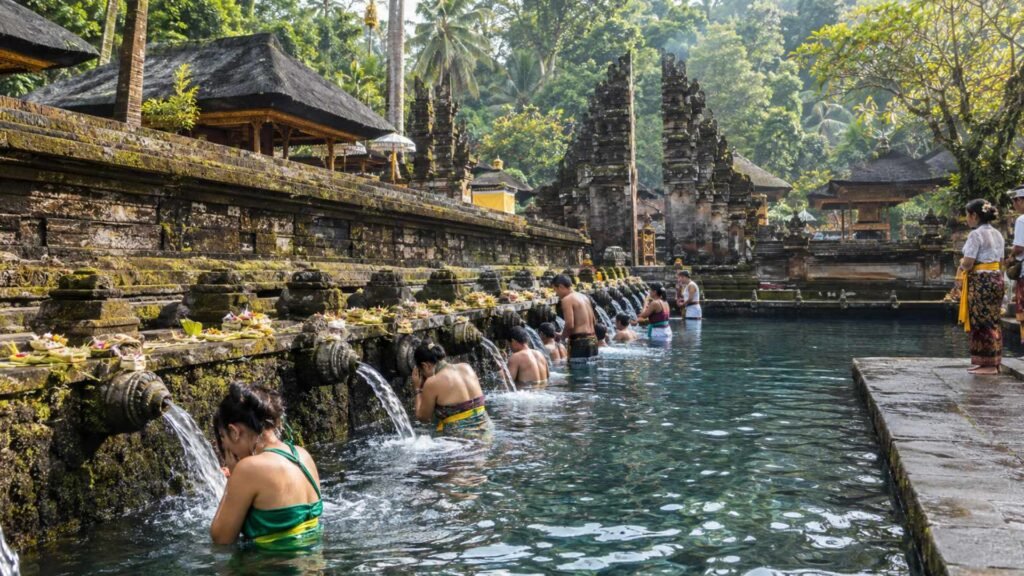
Tirta Empul is a well-known Hindu temple in Tampaksiring, associated with sacred spring water and purification traditions. It offers a different perspective on Balinese religious practices and can be a suitable companion to Gunung Kawi.
Allow enough time to explore respectfully. Visitors interested in participating in a purification ritual should follow local guidance and the temple’s current requirements.
This separate temple is known for its peaceful courtyards, water features, and lush surroundings. It can appeal to visitors who want to experience another sacred setting without traveling to a completely different part of Bali.
Make sure your driver or navigation app is set to the correct destination, as the similar names can cause confusion.
Travelers interested in Balinese agriculture can consider adding Tegallalang Rice Terraces to their itinerary. The landscape provides a contrast to Gunung Kawi’s rock-cut monuments, with cultivated slopes and walking paths offering different photographic opportunities.
Check the route and allow time for parking and walking, as visiting a rice terrace involves more than simply stopping beside the road.
For lunch, consider a local warung serving Indonesian dishes or return toward Ubud, where there is a wider choice of restaurants and cafés.
If you prefer a relaxed meal, avoid planning several attractions immediately after lunch. A short break can be especially welcome after walking down and climbing back from Gunung Kawi.
A simple itinerary is often the best way to enjoy Gunung Kawi without feeling rushed.
Early morning: Depart from your accommodation in Ubud.
Morning: Explore Gunung Kawi, allowing approximately 1.5–2 hours for the walk, monuments, and return climb.
Late morning: Continue to Tirta Empul if you are interested in Balinese spiritual traditions.
Lunch: Stop at a suitable local restaurant or return toward Ubud.
Afternoon: Return to your accommodation or add another nearby attraction if time and road conditions permit.
The timing is flexible rather than a guaranteed schedule. If you are staying in Seminyak, Canggu, or Kuta, allow more time for the journey in each direction.
Gunung Kawi can be rewarding for families whose children enjoy exploring historical sites and natural landscapes. However, the long staircase means parents should supervise children closely and avoid allowing them to run on the steps.
Older travelers can also appreciate the monuments, but individual mobility matters. Anyone with knee problems, balance difficulties, or limited stamina should consider whether the descent and uphill return are appropriate for them.
There is no need to rush. Take breaks, wear shoes with good grip, and turn back if weather or physical conditions make the walk unsafe.
Travelers who need step-free access should contact the site’s management before visiting to establish what access arrangements are currently available.
From a practical travel-planning perspective, the main challenge is not simply reaching Tampaksiring. It is allowing enough time to enjoy the site and return to the vehicle comfortably.
If you are coming from southern Bali, leave early and avoid scheduling another activity with a fixed booking immediately afterward. Traffic around central Bali can change throughout the day.
For travelers based in Ubud, Gunung Kawi can be part of a private cultural tour with nearby temples and a lunch stop. A private driver is useful when you want flexibility over departure time, walking breaks, and the number of destinations included.
Before setting off, agree on the itinerary and expected waiting arrangements with your driver. Keep in mind that transport can take you to the entrance, but it cannot remove the physical demands of exploring the valley itself.
For current entrance fees, opening hours, and access restrictions, verify details close to your travel date instead of relying on information that may have become outdated.
Gunung Kawi provides a different way to experience Bali. Its appeal lies in the combination of monumental rock carvings, royal history, a green river valley, and the opportunity to learn about the island’s cultural past.
The visit takes more effort than a quick roadside stop, but that is part of what makes the experience distinctive. You descend into the landscape, explore the ancient monuments at close range, and climb back out with a better appreciation of the setting.
If you are planning a cultural day trip from Ubud, Gunung Kawi is a strong option for travelers who value history, architecture, and natural scenery. Start early, dress respectfully, check current visitor information, and leave enough time to explore without rushing.
Gunung Kawi is located in Tampaksiring, Gianyar Regency, northeast of Ubud. Visitors reach the entrance by road and then walk down stone steps into the valley where the main monuments are located.
Its main distinction is a group of monumental shrines carved directly into natural rock cliffs. The complex combines ancient architecture, royal history, and a lush river-valley setting.
The complex is generally dated to the 11th century and is traditionally associated with Bali’s royal history during the reign of King Anak Wungsu. The shrines are commonly interpreted as royal memorials, although the precise identification of individual monuments should be treated cautiously.
Plan for approximately 1.5–2 hours for the descent, exploration, photography, and uphill return. Visitors who need frequent breaks or want to study the monuments in detail may require additional time.
An entrance fee is generally required, but the current price may change. Confirm the latest rate and any applicable visitor requirements before traveling.
Morning is generally a comfortable option because temperatures are often lower. Arriving early also leaves more flexibility for nearby attractions. Check the weather before setting out, especially during the rainy season.
It can be suitable for visitors who are comfortable with stairs, but the long descent and uphill return require physical effort. Parents should supervise children closely, while older visitors and people with mobility limitations should assess the route before starting.
Choose modest clothing that covers your shoulders and provides appropriate coverage for your legs. Follow the site’s current requirements for sarongs or other temple coverings, and wear footwear with good grip.
Yes. Both are in the Tampaksiring area and can be combined into a cultural day trip from Ubud. Allow enough time for each visit, the staircase at Gunung Kawi, and the drive between attractions.
Yes, particularly if you enjoy Balinese history, ancient stone architecture, cultural landmarks, and natural scenery. The physical effort involved makes it less suitable for travelers seeking a quick stop, but visitors who plan ahead can have a rewarding experience.

After sending email information to us, we will contact you as soon as possible via email sent directly





balidriverandtour12@gmail.com
+62 812 378 153 55

Bali Driver & Tour – 2024