- We are open every : MON - SUN : 6:00AM - 7:00 PM
- balidriverandtour12@gmail.com
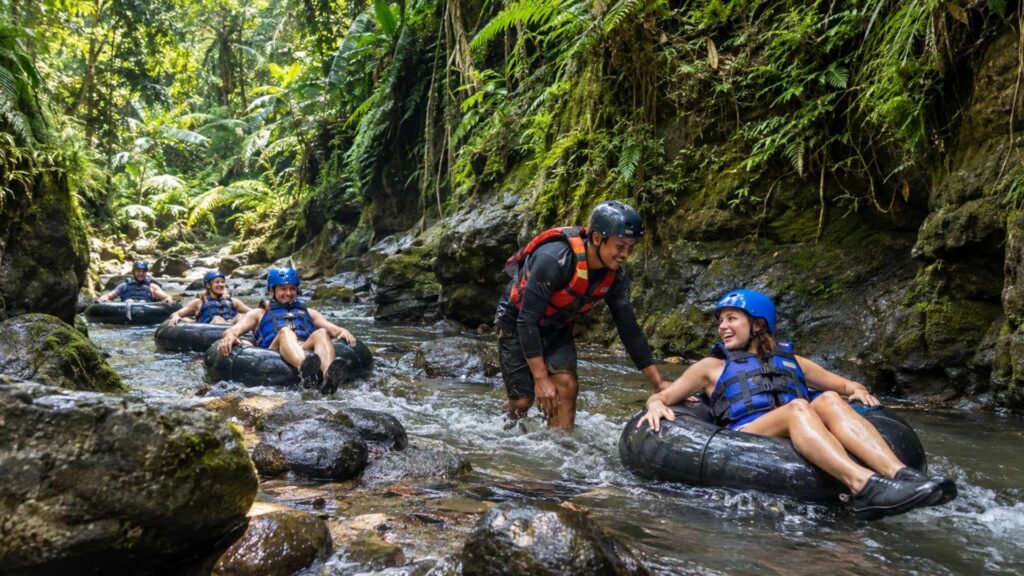
Canyon tubing Bali is one of the more unusual ways to experience the island’s countryside. Instead of sitting in a raft and paddling through rapids, you float through a natural canyon on an inflatable tube, surrounded by jungle, rock walls, flowing water, and greenery.
For travelers who want something more adventurous than sightseeing but less intense than white-water rafting, canyon tubing around Payangan, north of Ubud, is worth considering. The experience combines river scenery with a closer look at Bali’s less-developed landscape.
The most established canyon tubing experiences in this area use the Siap River in Payangan. Operators describe sections of the route as shallow and suitable for beginners, with guides accompanying participants throughout the activity. Some tours also include an off-road transfer into the canyon and optional flying fox sections.
Canyon tubing is a guided river adventure where you sit or lie in an inflatable tube and travel downstream through a canyon.
Unlike conventional rafting, you generally do not spend the entire experience paddling as a group. The attraction is the combination of floating water, natural canyon walls, jungle vegetation, and small river obstacles.
In Payangan, the canyon tubing experience follows the Siap Stream, with access to the canyon involving off-road vehicles and constructed paths, platforms, bridges, and other facilities designed to make the route accessible.
Some sections can be calm, while other parts require guides to help participants around rocks or changes in the river. This is why canyon tubing should still be treated as an organized adventure activity rather than simply swimming in a river.
Not exactly.
The terms are sometimes used interchangeably by tour sellers, but Bali’s Payangan experience is primarily a canyon and river tubing adventure. You float through a natural canyon rather than spending the entire trip inside a cave.
The best-known canyon tubing location is around Payangan in Gianyar Regency, north of Ubud.
The activity area is in a rural part of Bali rather than in the busy tourist center. Bali Quad Discovery, one of the established operators in the area, lists its activity location around Kerta, Payangan, while other current operators also advertise canyon tubing experiences near Ubud.
This location is one reason canyon tubing works well as part of an Ubud adventure day.
The scenery changes noticeably as you leave central Ubud. Instead of cafés, galleries, and traffic, the journey moves toward villages, plantations, jungle roads, and river valleys.
If you are staying in Ubud, getting to Payangan is relatively straightforward, although the exact journey depends on the operator and starting point.
A private car with a driver is particularly convenient because some canyon tubing operators have specific meeting points rather than a single central tourist entrance.
As a general planning guide, allow roughly 45–75 minutes from central Ubud, depending on your hotel location, traffic, and the exact Payangan activity base.
From southern Bali, the journey is longer. Travelers staying in Seminyak, Canggu, Kuta, Jimbaran, or Nusa Dua should allow extra time, especially if traveling during the morning peak.
A current operator’s published pickup schedule, for example, lists morning pickups around 8:15–10:15 from Ubud and earlier departures from southern resort areas. Schedules can change, so confirm directly when booking.
If you are combining canyon tubing with another attraction, tell your driver the exact activity base, not simply “Payangan.” Payangan covers a fairly large rural area, and different adventure operators can use different meeting points.
A typical experience starts with registration, changing, equipment fitting, and a safety briefing.
Depending on the operator, you may then travel toward the canyon by an off-road vehicle before reaching the river.
Once you enter the canyon, the experience becomes much more about the surroundings than speed.
Expect:
One established Payangan operator states that swimming experience is not required because the river is shallow in many areas, although travelers should still follow the operator’s safety requirements.
Do not interpret “beginner-friendly” as meaning risk-free. River conditions can change after rainfall, and the guide’s instructions should always take priority.
For most travelers, canyon tubing is easier than white-water rafting.
The main challenge is not technical paddling. Instead, you should be comfortable getting wet, moving over uneven surfaces, climbing in and out of the tube when instructed, and walking short sections around obstacles.
Some operators specifically describe their Payangan canyon tubing as suitable for children and beginners, but age policies differ. One established operator lists children from approximately five years old, while other experiences may have different requirements.
It can be a good family adventure when children meet the operator’s age and safety requirements.
However, parents should consider more than age. A child should be comfortable with:
For families with young children, confirm the exact child policy before paying.
Canyon tubing may be manageable for active older travelers, but it is not the best choice for everyone.
Getting into and out of a tube, walking over slippery or uneven surfaces, and navigating river obstacles can require reasonable mobility.
If you have limited mobility, ask the operator about the current route before booking.
The best conditions are generally associated with drier weather, particularly when you want clearer water and more predictable river conditions.
However, Bali’s weather is tropical and can change quickly.
During the rainy season, heavy rainfall upstream can affect river conditions even when the weather at your hotel looks fine. Strong rain can increase water levels and current speed.
For that reason, the operator may change or postpone an itinerary when field conditions are unsuitable. Some current operators explicitly note that itineraries can change because of weather and local conditions.
Light rain does not necessarily mean the activity will be cancelled.
However, heavy or prolonged rain is different. Since canyon tubing depends directly on river conditions, safety decisions should be left to the activity operator.
If your Bali holiday is during the wet season, keep your itinerary flexible rather than scheduling another non-refundable attraction immediately afterward.


You are going to get wet, so dress for the activity rather than for sightseeing.
Bring:
Avoid loose jewelry, expensive watches, and anything that can easily fall into the river.
Some operators specifically recommend swimwear, T-shirts, sports or river shoes, and extra clothing.
There is no single Bali-wide canyon tubing price.
Prices depend on whether you book the activity only, add hotel transportation, choose a private package, or combine tubing with ATV or another adventure.
For example, one current Bali activity operator advertises canyon tubing from around IDR 400,000 – 1,000,000 per person, while an established Payangan operator lists a different package structure that includes equipment and other services.
Because prices and inclusions change, always check:
Do not compare two prices until you know what each package contains.
If you are choosing between the two, consider the experience you want.
| Canyon Tubing | White Water Rafting |
|---|---|
| Float individually in a tube | Travel together in a raft |
| More focus on canyon scenery | More focus on rapids |
| Usually less technical | Requires coordinated paddling |
| Generally calmer | Can be significantly more active |
| Good for adventure beginners | Better for travelers wanting stronger thrills |
If your priority is jungle scenery and a relaxed water adventure, canyon tubing is likely the better fit.
If you want rapids, teamwork, and a more energetic river experience, consider white-water rafting instead.
Morning is usually the safest choice for a full Bali sightseeing day.
An early start helps you avoid some of the heavier traffic around Ubud and southern Bali and gives you more flexibility if the activity takes longer than expected.
For travelers staying in Ubud, a morning canyon tubing session can leave the afternoon available for another attraction.
For example:
Morning: Canyon tubing in Payangan
Lunch: Ubud or Payangan area
Afternoon: Tegalalang or another Ubud-area attraction
Evening: Return to your hotel
Avoid planning a tightly timed temple visit immediately after the activity. River adventures can run longer than expected because of weather, group size, transfers, and changing river conditions.
If you want more than a single activity, consider a relaxed combination rather than filling every hour.
08:00–09:00 – Hotel pickup in Ubud
Morning – Canyon tubing in Payangan
12:00–13:00 – Lunch
Afternoon – Tegalalang Rice Terrace or a nearby village
Late afternoon – Return to Ubud
Several operators offer canyon tubing combined with ATV or buggy adventures. This creates a very different day because you experience Bali’s landscape both on land and on the river.
However, an ATV + tubing combination can be physically tiring. Families, couples looking for a slower day, or older travelers may prefer canyon tubing followed by a relaxed lunch and sightseeing.
From a transport perspective, Payangan is easier to enjoy when you do not rush.
The final approach to adventure bases can be narrower and slower than major Bali roads. GPS travel estimates can also change quickly because of village traffic or road conditions.
If your canyon tubing starts in the morning, do not book a sunset attraction on the opposite side of Bali immediately afterward.
Even if the activity provides changing facilities, having a completely dry set of clothes makes the drive back much more comfortable.
Do not assume your phone will remain dry just because the river looks calm. Use a reliable waterproof pouch if you want to carry it.
The most important question before departure is not simply “Is the weather sunny?”
Ask whether river conditions are suitable for tubing that day.
Canyon tubing is one of those activities where taking too many photos can make you miss the experience.
If photography is allowed, the best images usually come from the contrast between:
A waterproof phone case is more practical than carrying a conventional camera.
Do not ask guides to take unnecessary risks for a photograph. River conditions and footing are more important than getting the perfect shot.
Flip-flops can be uncomfortable or insecure on wet surfaces. Choose footwear with a reliable grip.
Leave unnecessary valuables at the hotel or secure storage.
Light rain and dangerous river conditions are not the same thing. Let the operator assess the situation.
A low advertised price may exclude transportation, meals, insurance, or other services.
Payangan is outside central Ubud. Add a realistic road buffer, particularly during busy periods.
Canyon tubing is particularly appealing to:
It may not be ideal for people who dislike getting wet, have significant mobility limitations, or are looking specifically for intense white-water action.
Because Payangan is close to the wider Ubud region, you can build a full day around the activity.
Possible combinations include:
For temple visits, remember that Balinese Hindu temples require respectful clothing and behavior. Bring a sarong or use one provided at the temple where required.
Yes, particularly if you have already seen the classic Bali beaches and temples and want to experience a quieter side of the island.
The biggest appeal is not simply floating down a river. It is the setting: a jungle canyon, flowing water, rural Payangan scenery, and an adventure that feels very different from a standard Bali sightseeing tour.
For first-time visitors, Ubud + canyon tubing + another nearby attraction is a practical way to experience both Bali’s cultural side and its natural landscape without spending the entire day in the car.
If you prefer independent transport, a Private Driver Bali service can also make the day easier because you can keep the sightseeing portion flexible around the activity’s confirmed schedule.
Before confirming your adventure, check the following directly with the operator:
Most importantly, choose an operator with proper safety procedures and experienced guides rather than selecting purely on price.
Canyon tubing is one of Bali’s more distinctive nature adventures, and when conditions are right, it offers an enjoyable way to discover the green countryside around Payangan from a completely different perspective.
The best-known canyon tubing experiences are located around Payangan in Gianyar, north of Ubud. Several adventure operators use river and canyon areas in this region.
Not necessarily. Some Payangan operators state that swimming experience is not required because parts of the river are shallow and guides accompany participants. However, you should always follow the current operator’s safety requirements.
Some operators accept children from around five years old, but age and participation requirements vary. Check the current policy before booking, especially for young children.
The total experience varies by operator and package. Some current tours advertise an activity duration of around 2.5 hours, while packages including hotel transfers and other activities can take considerably longer.
It depends on your preference. Canyon tubing is generally more focused on floating and scenery, while rafting provides more active paddling and rapids. Travelers wanting a gentler adventure may prefer tubing.
Wear swimwear or quick-drying clothing and secure river shoes or sandals. Bring a complete change of clothes because you should expect to get wet.
Yes. Several operators offer canyon tubing combined with ATV or buggy adventures. This can create a full-day adventure combining jungle tracks and river scenery.
Light rain does not automatically mean the activity will stop. However, heavy rain can affect river conditions. The operator should make the final decision based on current safety conditions, and itineraries may change when necessary.
Payangan is north of central Ubud. Driving time varies depending on your hotel, traffic, and the exact activity base, so it is better to allow a generous road buffer rather than relying on the shortest GPS estimate.
For travelers who enjoy nature, water activities, and less conventional Bali experiences, canyon tubing can be an excellent choice. It is especially convenient for visitors staying in Ubud who want to combine an adventure with nearby cultural and nature attractions.

After sending email information to us, we will contact you as soon as possible via email sent directly





balidriverandtour12@gmail.com
+62 812 378 153 55

Bali Driver & Tour – 2024