- We are open every : MON - SUN : 6:00AM - 7:00 PM
- balidriverandtour12@gmail.com
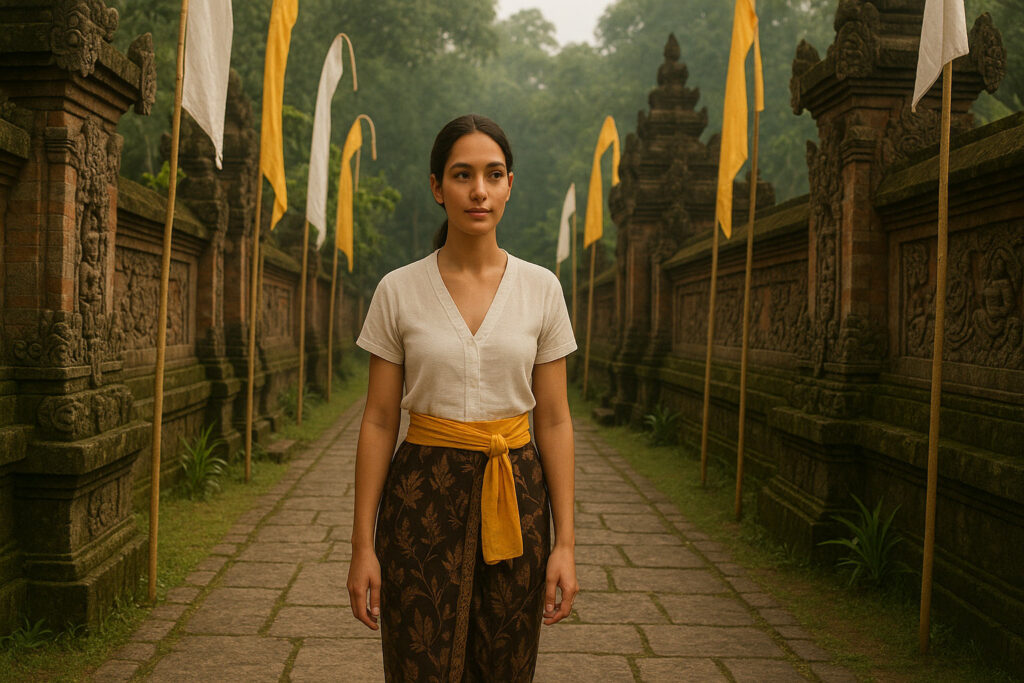
Perched on the majestic slopes of Mount Agung, Besakih Temple Bali is the island’s largest, oldest, and most sacred Hindu temple complex. Known as the Mother Temple of Bali, this remarkable spiritual site has been a place of worship for centuries and continues to play an important role in the daily lives of Balinese Hindus.
Unlike many tourist attractions in Bali, Besakih Temple offers much more than beautiful architecture. It is a living temple where religious ceremonies, prayers, and cultural traditions continue throughout the year. Visitors not only admire the impressive stone gates and mountain scenery but also gain a deeper appreciation of Bali’s spiritual heritage.
Whether you’re interested in Balinese culture, photography, history, or simply exploring one of Bali’s most iconic landmarks, Besakih Temple deserves a place on your travel itinerary.
Besakih Temple is located in Besakih Village, Karangasem Regency, on the southwestern slopes of Mount Agung, Bali’s highest and most sacred volcano. Sitting at approximately 1,000 meters above sea level, the temple enjoys a cooler climate and panoramic views of the surrounding mountains and valleys.
Approximate driving times:
Since public transportation to this area is extremely limited, most visitors choose a private driver in Bali for a comfortable and flexible journey. Along the way, you’ll pass traditional villages, rice terraces, and scenic mountain roads that make the drive part of the experience.
The history of Besakih Temple stretches back more than a thousand years. Historical records suggest the site became an important religious center around the 8th century, although some archaeological findings indicate that the area may have been considered sacred long before then.
Over the centuries, Balinese kingdoms expanded the complex by building additional shrines and temples dedicated to different deities, royal ancestors, and local guardians.
Today, Besakih remains the most significant temple complex on the island and hosts countless religious ceremonies throughout the Balinese calendar.
One of the most remarkable moments in its history occurred during the 1963 eruption of Mount Agung. Although nearby villages suffered severe damage, the main temple complex survived with minimal impact. Many Balinese believe this event reinforced Besakih’s spiritual significance.
Besakih Temple is often referred to as the Mother Temple of Bali because it serves as the spiritual center of the island’s Hindu community.
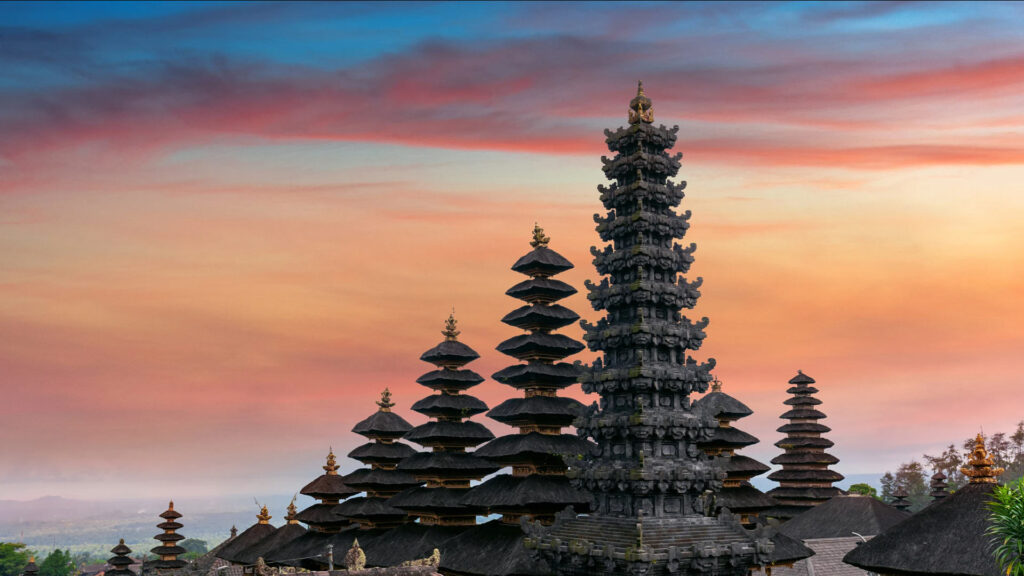
Rather than being a single temple, Besakih is a vast complex consisting of more than 80 individual temples and shrines spread across the mountainside.
The most important sanctuary is Pura Penataran Agung, which symbolizes the center of the temple complex. Other temples honor different manifestations of God in Balinese Hinduism, ancestors, and guardian spirits.
The temple also reflects the Balinese philosophy of Tri Hita Karana, which teaches harmony between:
This philosophy continues to shape everyday life throughout Bali and is clearly reflected in the design and purpose of Besakih Temple.
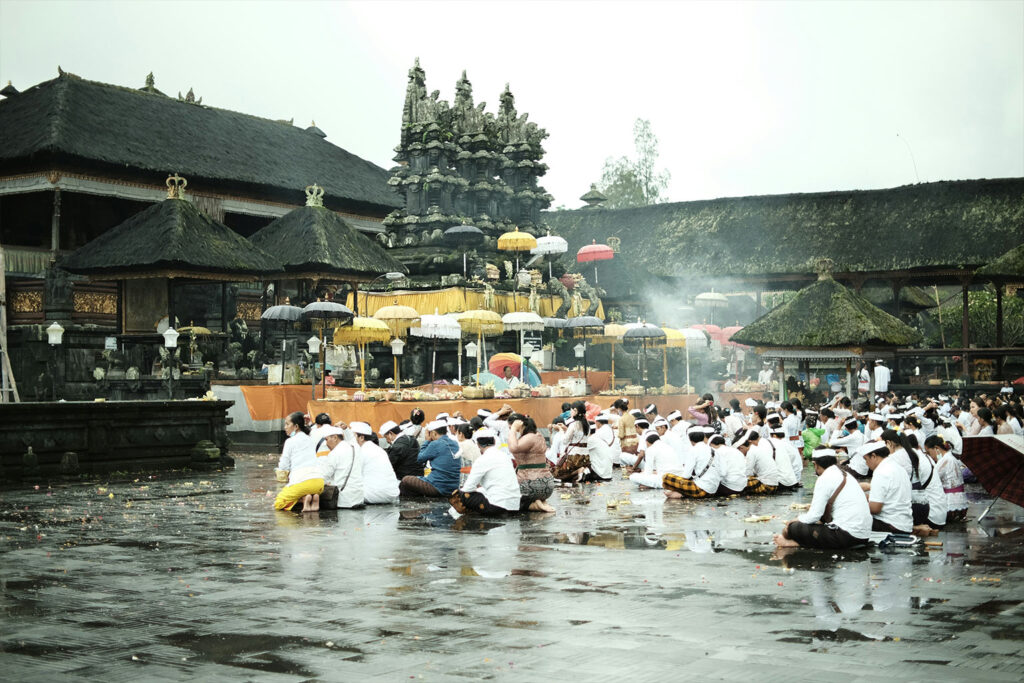
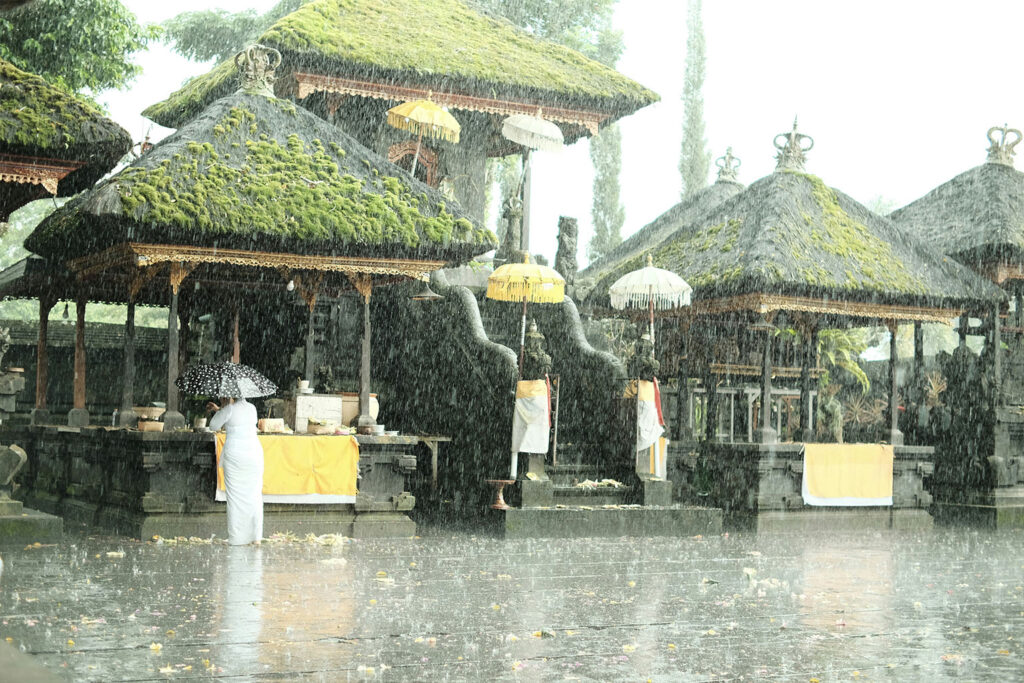
Walking through Besakih Temple Bali feels very different from visiting many other temples on the island. The complex is spread across multiple terraces that climb the mountainside, with impressive split gates, ancient stone staircases, beautifully carved shrines, and open courtyards overlooking East Bali.
Because this is an active place of worship, you’ll often see Balinese families bringing offerings, priests leading ceremonies, and worshippers dressed in traditional white clothing. On ceremony days, parts of the temple become especially vibrant, but visitors should always observe respectfully and avoid interrupting religious activities.
If you’re interested in Balinese culture, hiring the official local guide included with your entrance ticket can help you understand the symbolism behind the temples, shrines, and traditional rituals.
Entrance fees may change over time, so it’s always best to verify the latest information before your visit.
As a general guide:
The temple is generally open from 8:00 AM until 6:00 PM, although worshippers may access certain areas outside these hours for religious purposes.
Since Besakih is Bali’s holiest temple, modest clothing is required.
Visitors should:
Women who are menstruating are traditionally asked not to enter temple grounds in accordance with Balinese Hindu customs.
Showing respect for local traditions helps preserve the peaceful atmosphere that makes Besakih such a meaningful destination.
The best time to visit is early in the morning between 8:00 AM and 10:00 AM.
At this time you’ll usually enjoy:
The dry season, typically from April to October, generally offers the clearest weather. During the rainy season, brief afternoon showers are common, so bringing a light rain jacket or umbrella is recommended.
Besakih Temple is one of Bali’s most photogenic cultural sites, but respectful photography is essential.
Some of the best photo opportunities include:
Avoid blocking worshippers or taking close-up photos during ceremonies without permission. A zoom lens is useful for capturing details while maintaining a respectful distance.
Because the drive to Besakih is relatively long, most visitors combine it with other attractions in East Bali.
Popular stops include:
A scenic viewpoint overlooking rice terraces and rolling hills, ideal for a short break before reaching the temple.
Known for peaceful villages, traditional weaving, and beautiful rice fields, Sidemen offers a quieter side of Bali away from the crowds.
This former royal palace features elegant fountains, koi ponds, and beautifully landscaped gardens.
Famous for its “Gate of Heaven,” this temple can be combined with Besakih if you don’t mind an early departure and a full-day itinerary.
A comfortable itinerary could look like this:
This route gives you enough time to enjoy each destination without feeling rushed.
As someone who regularly drives guests to Besakih, a few practical tips can make your day much smoother.
Mountain roads become busier on weekends and Balinese holy days, so leaving early is always worthwhile. Comfortable walking shoes are recommended because you’ll climb several flights of stone steps.
Parking is available in the designated visitor area, and shuttle transport is commonly used to reach the entrance. Bring drinking water, sunscreen, and some cash for snacks or souvenirs, although many vendors now accept digital payments.
If you’re interested in photography, let your driver know beforehand. There are several roadside viewpoints on the journey that many visitors miss because they aren’t included on standard tour schedules.
Yes. It is Bali's largest and most important Hindu temple, offering impressive architecture, rich history, and beautiful mountain scenery.
Most visitors spend around 1.5 to 2 hours exploring the temple complex with a local guide.
Yes. International visitors are welcome as long as they follow the temple's dress code and respect religious ceremonies.
Yes. Visitors must wear a sarong and sash and dress modestly before entering the temple grounds.
Yes, but many travelers find it easier to visit with a private driver since public transportation to East Bali is limited.
A visit to Besakih Temple Bali is about more than seeing another famous landmark. It offers an opportunity to experience one of the island’s most important spiritual sites while enjoying spectacular views of Mount Agung and the surrounding countryside.
Whether you’re passionate about Balinese culture, interested in temple architecture, or planning your first trip to East Bali, Besakih rewards visitors who take the time to explore respectfully. Pairing it with nearby attractions like Sidemen or Tirta Gangga creates a memorable day that showcases a quieter and more authentic side of the island.
If you’re planning to visit Besakih Temple, traveling with a local private driver gives you the flexibility to explore at your own pace, stop at scenic viewpoints along the way, and enjoy a relaxed journey through East Bali.

After sending email information to us, we will contact you as soon as possible via email sent directly





balidriverandtour12@gmail.com
+62 812 378 153 55

Bali Driver & Tour – 2024