- We are open every : MON - SUN : 6:00AM - 7:00 PM
- balidriverandtour12@gmail.com
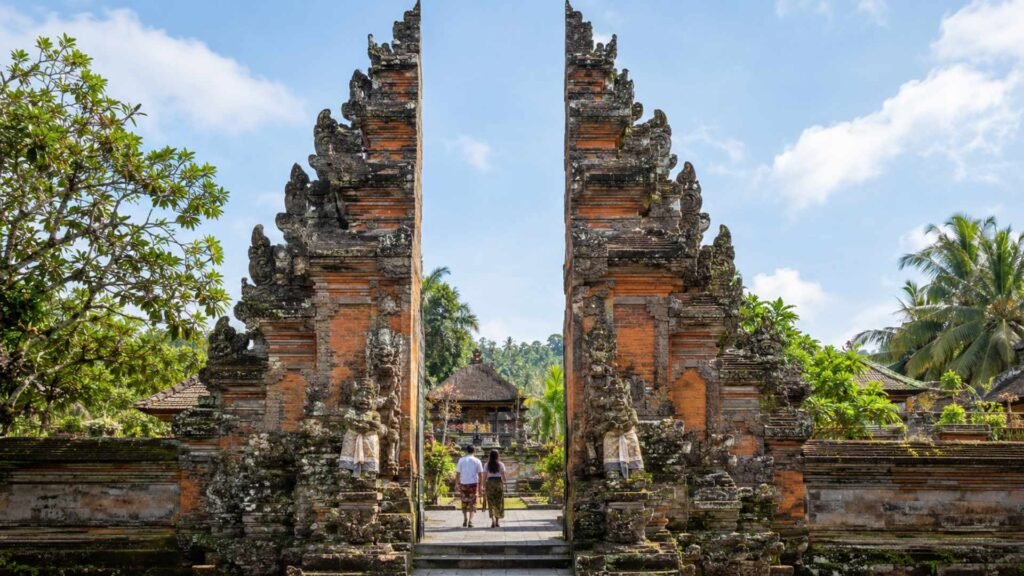
Bali temple architecture is much more than ornate gates, stone carvings, and towering meru roofs. A Balinese temple, or pura, is carefully planned around religious philosophy, the natural landscape, community life, and the relationship between people and the divine.
For travelers, understanding these details can completely change the way you experience Bali’s temples. Instead of seeing a beautiful building and taking a photo, you begin to understand why a temple entrance is designed differently from a shrine, why some buildings are positioned toward the mountains, and why a temple may feel completely different during a ceremony.
After years of driving visitors around Bali, one thing I have noticed is that travelers often enjoy temples more when they know what they are looking at. This guide explains the main features of Bali temple architecture, where to see them, and how to visit respectfully.
Balinese temple architecture developed from Hindu traditions, local beliefs, ancient building knowledge, and the island’s relationship with nature.
One important principle is Tri Hita Karana, a philosophy centered on harmony between humans, the natural environment, and the divine. This concept influences the organization of sacred spaces as well as traditional Balinese settlements.
Another important idea is orientation.
Traditionally, the direction toward the mountains is associated with greater sacredness and is commonly described as kaja, while the direction toward the sea is kelod. The exact interpretation can vary according to location and local tradition, so temple design should not be reduced to a simple north-versus-south rule.
This is one reason Bali’s temples look as though they belong to their surroundings rather than simply being placed on a piece of land.
You do not need to be an architecture expert to recognize the most important features. Once you know what to look for, visiting a temple becomes much more interesting.
The candi bentar is one of the most recognizable elements of Balinese architecture.
It consists of two matching structures that appear to have been split down the middle, creating an open passage between them.
You will see candi bentar at temple complexes, traditional compounds, cultural attractions, and other important entrances around Bali.
The gate is visually impressive, but it is important to understand that not every split gate represents the innermost sacred area of a temple.
Another gateway you may encounter is the kori agung, which is generally more enclosed and associated with access to a more sacred area.
Large guardian figures may stand around temple entrances. These statues are not simply decorative. They form part of the visual language of Balinese sacred architecture.
When photographing them, look at the details around the entrance rather than only taking a wide-angle photograph.
The meru is probably the most recognizable vertical feature of Bali temple architecture.
These multi-tiered towers have roofs traditionally made using materials such as palm fiber. The number of roof levels varies according to the shrine’s religious significance and local tradition.
Pura Ulun Danu Beratan provides one of Bali’s most famous examples. Its multi-tiered structures sit beside Lake Beratan in the cool Bedugul highlands, creating one of the island’s most recognizable temple landscapes.
Pura Besakih is another excellent place to observe meru towers within a much larger sacred complex on the slopes of Mount Agung.
Balinese temple compounds commonly contain open-sided pavilions known as bale.
These structures can have different functions depending on the temple and local tradition. Some are used during ceremonies, while others serve particular community or ritual purposes.
Their open design also makes sense in Bali’s tropical climate, allowing air to move naturally through the structure.
Stone, brick, wood, and other natural materials are commonly incorporated into Balinese architecture.
Carvings can depict religious figures, mythical creatures, plants, animals, and other symbolic motifs. The level of detail can be remarkable, especially at older temples and important cultural sites.
However, decoration is only one part of the experience. The arrangement of buildings and courtyards is just as important as the individual carvings
One of the most useful concepts for visitors to understand is Tri Mandala, the division of a sacred compound into different levels of space.
The terminology and exact arrangement can differ between temples, but visitors will commonly encounter three broad zones:
This is the least sacred area and may function as a transition between the outside world and the temple complex.
Depending on the temple, you may find gathering spaces and other facilities here.
The middle courtyard represents a transition toward more sacred space.
During ceremonies, different activities can take place within this part of the temple depending on local customs.
The innermost area is generally the most sacred.
Shrines and important ritual structures are located here, and access may be restricted during ceremonies or according to temple rules.
This is why travelers should never assume that every part of a temple is open to visitors.
Pura Lempuyang, for example, is described as having three zones reflecting the Tri Mandala concept: Jaba Pisan, Jaba Tengah, and Jeroan or Utama Mandala.
One of the most beautiful characteristics of Bali temple architecture is the relationship between buildings and their surroundings.
At Pura Besakih, the temple complex climbs the slopes of Mount Agung. The mountain backdrop is not merely scenic; the location itself has deep spiritual importance.
At Pura Ulun Danu Beratan, water and mountains become part of the visual experience. The temple’s relationship with Lake Beratan is central to its identity.
At Pura Uluwatu, the architecture interacts dramatically with a high ocean cliff.
And at Tanah Lot, the temple’s position on a coastal rock creates an entirely different relationship between sacred architecture and the sea.
This is why visiting several temples around Bali is worthwhile. They do not all tell the same architectural story.
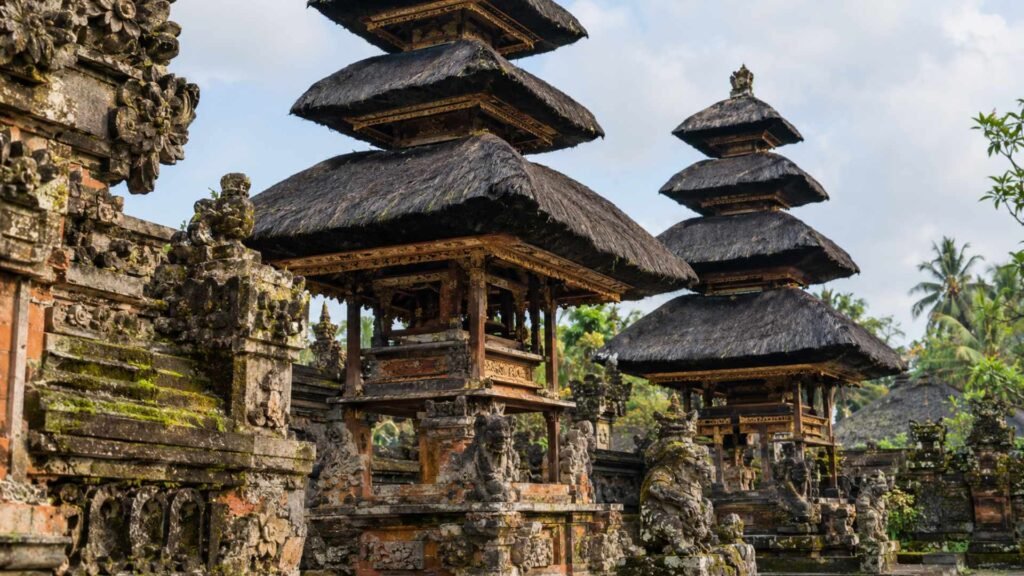
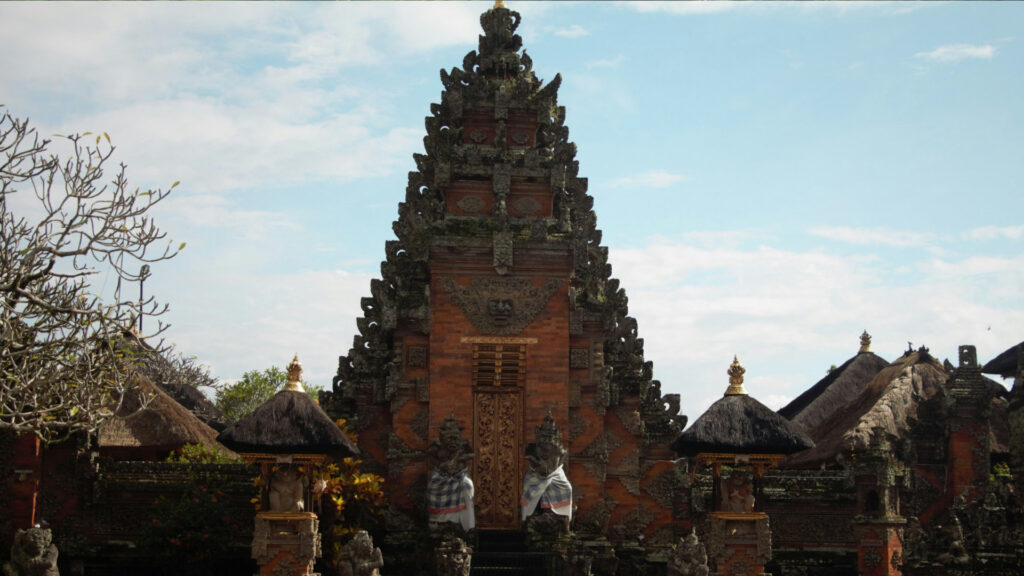
For travelers who want to understand the scale of Balinese sacred architecture, Pura Besakih should be high on the list.
It is a large temple complex on Mount Agung and consists of multiple temples rather than a single building. The central Penataran Agung is surrounded by numerous supporting temples.
From Ubud, allow roughly two hours by car under reasonable traffic conditions. From the southern tourist areas, the journey can take considerably longer.
Start early. East Bali traffic can build later in the day, and morning light can also provide better mountain views.
This is one of the best choices if you want architecture combined with dramatic natural scenery.
The temple sits beside Lake Beratan in the Bedugul highlands, around 1,500 meters above sea level. The cooler climate can be a welcome change from Bali’s coastal areas.
Bring a light jacket and allow extra time if visiting during the rainy season because mist and cloud can arrive quickly.
Uluwatu demonstrates how architecture can adapt to an extraordinary natural setting.
The temple sits on a dramatic cliff overlooking the Indian Ocean and is one of Bali’s important directional temples.
For travelers combining architecture with sunset, arrive well before sunset rather than trying to enter at the last minute.
Tanah Lot offers a completely different architectural experience.
The temple’s famous offshore location makes the landscape an essential part of the visual composition. The site is particularly popular around sunset.
Because sunset attracts large crowds, allow additional driving time when returning toward Canggu, Seminyak, or Kuta.
You do not need expensive equipment.
For the best results:
For famous viewpoints such as Lempuyang, weather matters enormously. The iconic Mount Agung backdrop is not guaranteed because clouds can completely obscure the mountain.
For architecture photography and comfortable sightseeing, early morning is usually the easiest choice.
Morning visits generally provide cooler temperatures and can help you avoid some of the heavier tourist traffic.
The dry season can provide clearer views, but Bali’s weather can change quickly at any time of year.
During the rainy season, bring a compact umbrella or rain jacket and protect cameras and phones. Wet stone can also become slippery, particularly on steps.
Ceremony days can be fascinating because you may see Bali’s architecture functioning as a living religious environment. However, ceremonies are not performances for visitors. If you encounter one, follow local instructions and keep a respectful distance.
Temple architecture makes more sense when you understand that these are active places of worship.
Before entering a temple:
At some temples, additional restrictions apply. Rules can also change during religious ceremonies.
One common mistake is assuming that every impressive gate is the same type of structure.
Another is focusing entirely on Instagram-famous viewpoints while overlooking the actual temple complex.
A third mistake is visiting several temples at the wrong time of day. For example, combining distant East Bali and North Bali attractions without considering traffic can turn a cultural day trip into hours in the car.
A better approach is to group temples geographically.
For example, an East Bali tour can combine Besakih with other nearby cultural and scenic attractions. A North Bali tour can pair Ulun Danu Beratan with waterfalls or other highland destinations.
If your main interest is architecture rather than simply ticking off famous attractions, consider a route that includes different architectural environments.
Morning: Start at Pura Besakih or another East Bali temple and spend time examining its courtyards, gates, shrines, and relationship with Mount Agung.
Midday: Have lunch at a local restaurant along the route rather than rushing directly to the next attraction.
Afternoon: Continue toward another temple or traditional village where you can see how sacred architecture connects with everyday Balinese compounds.
Late afternoon: Finish with a temple in a scenic setting, such as a coastal temple, if the route and traffic conditions allow.
A private driver is useful for this type of day because temple visits often take longer than expected. You can spend 30 minutes at one site and discover that you need two hours at another.
This topic is especially interesting for:
If mobility is a concern, choose temples carefully. Some sites involve substantial stairs or walking. Pura Lempuyang’s upper temple, for example, requires a significant climb, while other temple attractions are much easier to access.
Bali temple architecture is not simply a visual style.
The gates, courtyards, meru towers, shrines, orientation, carvings, and relationship with mountains, lakes, forests, and the ocean all form part of a larger cultural system.
Once you understand that, places such as Besakih, Ulun Danu Beratan, Uluwatu, and Tanah Lot stop looking like unrelated tourist attractions. You begin to see the different ways Balinese communities have connected sacred space with the island’s landscape.
For travelers who want to explore several temples without worrying about driving, parking, road conditions, or building an efficient route, a Private Driver Bali service can be a practical option. The best approach is to choose a small number of temples that genuinely interest you rather than trying to visit as many as possible in one day.
Bali’s temples are living places of worship. Take your time, follow local customs, and look beyond the famous photographs. That is where the real beauty of Bali temple architecture begins.
1. What is Bali temple architecture?
Bali temple architecture is the traditional design of Balinese Hindu sacred spaces, combining religious philosophy, spatial planning, natural materials, decorative art, and the surrounding landscape.
2. What is the most recognizable feature of Bali temple architecture?
The split candi bentar gate and multi-tiered meru towers are among the most recognizable features, although Bali temples contain many other architectural elements.
3. What does a meru tower mean in Bali?
A meru is a sacred multi-tiered shrine associated with Balinese Hindu worship. The number of tiers can indicate religious significance and varies according to the shrine and local tradition.
4. Why do Bali temples have split gates?
The candi bentar is a traditional split gateway used in Balinese architecture. It creates an impressive transition into a compound and forms part of the architectural organization of sacred and traditional spaces.
5. Which Bali temple is best for seeing traditional architecture?
Pura Besakih is one of the best choices because its large sacred complex contains numerous temples, shrines, courtyards, gates, and meru structures in a dramatic Mount Agung setting.
6. Can tourists enter Bali temples?
Many temples welcome visitors in designated areas, but access to sacred spaces varies. Visitors must follow local rules, dress appropriately, wear a sarong when required, and respect ceremonies and restricted areas.
7. What should I wear to a Bali temple?
Wear clothing that covers the shoulders and knees and use a sarong when required by the temple. Comfortable footwear is useful because some temple complexes involve steps and uneven surfaces.
8. What is the best time to photograph Bali temples?
Early morning is generally excellent for softer light, cooler temperatures, and fewer visitors. For sunset temples such as Tanah Lot or Uluwatu, arrive well before sunset because traffic and crowds can be heavy.
9. Is Bali temple architecture the same at every temple?
No. Temples vary according to their location, function, history, local traditions, and relationship with the surrounding landscape. A mountain temple can look very different from a coastal or lakeside temple.
10. What is the best way to visit several temples in Bali?
Group temples by region instead of trying to cross the island repeatedly. A private driver can make this easier because you can adjust departure times, waiting periods, and stops according to traffic and how long you want to explore each temple.

After sending email information to us, we will contact you as soon as possible via email sent directly





balidriverandtour12@gmail.com
+62 812 378 153 55

Bali Driver & Tour – 2024