- We are open every : MON - SUN : 6:00AM - 7:00 PM
- balidriverandtour12@gmail.com
A Bali Cultural Day Trip is one of the best ways to understand the island beyond its beaches, resorts, and famous viewpoints.
Bali’s culture is not something you simply look at for an hour and leave behind. It is part of everyday life: morning offerings outside homes, village temples, traditional ceremonies, family compounds, rice farming, wood carving, painting, dance, and local food.
After years of driving travelers around Bali, one thing is clear: a cultural day is much more enjoyable when you visit fewer places and spend enough time understanding them.
Instead of trying to visit six temples in one day, a better approach is to combine one or two meaningful temples with a traditional village, an art experience, and a good local meal.
This guide explains how to plan a cultural day trip, which areas work best, how much driving to expect, what to wear, and how to behave respectfully around Balinese religious sites.
A cultural trip should be more than a collection of photographs.
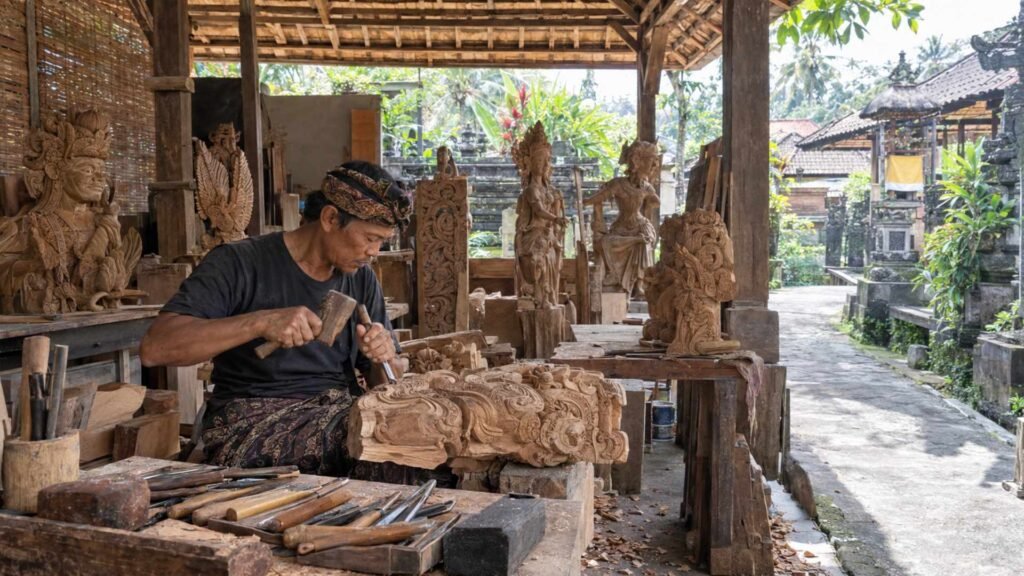
The most rewarding experiences usually involve seeing how Balinese traditions continue in ordinary life. You might watch an artisan carve wood, see offerings being prepared, walk through a traditional village, visit a water temple, or encounter a ceremony while traveling between destinations.
That is why Ubud and central Bali are particularly convenient for cultural day trips. Ubud is surrounded by traditional art villages, temples, rice terraces, and communities where local crafts remain part of daily life.
For travelers staying elsewhere, however, other cultural routes can be equally interesting.
The key is choosing one geographic area rather than spending most of the day inside a car.
For first-time visitors, Ubud is probably the easiest starting point.
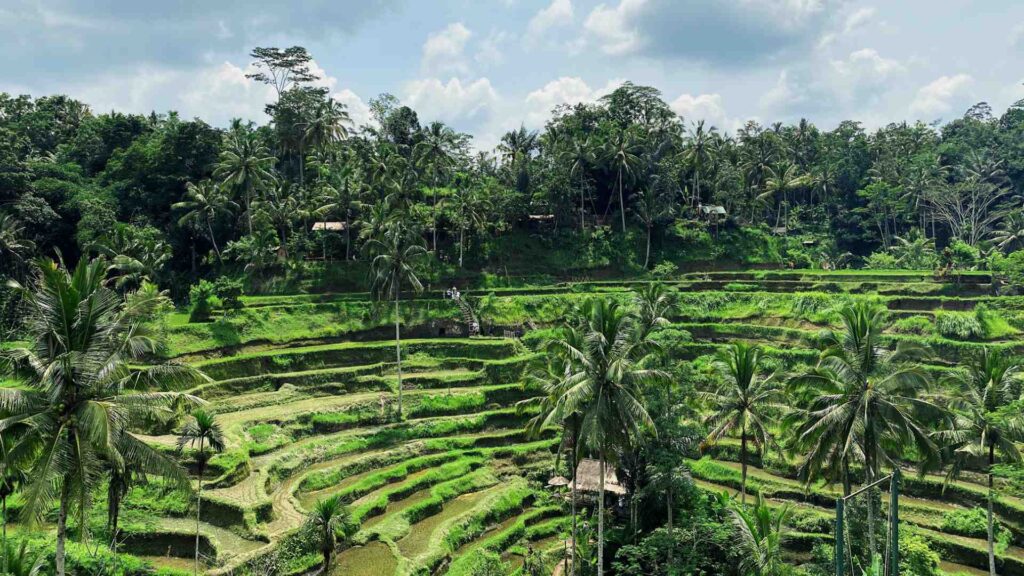
A cultural route can include Tirta Empul Temple, Goa Gajah, a traditional village, Ubud Palace, or an art village. You can also add Tegallalang Rice Terrace if you want some landscape photography.
The advantage is variety without excessive long-distance driving.
A typical Ubud cultural route could look like:
Tirta Empul → traditional village → local lunch → art village → Ubud Palace → Ubud Art Market
The exact order should depend on your hotel location and the day’s traffic.
Tirta Empul in Tampaksiring is one of the most interesting cultural stops around Ubud because it remains an active sacred site rather than simply an architectural attraction.
The temple is known for its holy spring and purification tradition. Visitors can explore the temple area, while participation in a purification ritual requires following the site’s procedures and cultural rules. Current published information lists an entrance fee of IDR 75,000 for adults and IDR 50,000 for children aged 5–12, with children under five listed as free. Opening information can vary between sources, so check locally before visiting.
From central Ubud, allow roughly 40–50 minutes in normal conditions, although traffic can make the journey longer.
Local driver tip: Go in the morning. The temperature is generally more comfortable, and you have more flexibility for the rest of the itinerary.
If you are not participating in the purification ritual, there is no reason to rush. Take time to observe the courtyards, stone carvings, shrines, and the way local worshippers use the temple.
One of the most rewarding cultural experiences is visiting villages where traditional crafts are still practiced.
A route can include:
Rather than simply buying souvenirs in a shop, ask whether you can see the production process.
Watching an artisan work gives you a better understanding of why Balinese crafts look the way they do and how skills are passed between generations.
For families, this can be particularly enjoyable because children can see how something is made instead of only seeing the finished product.
If you have already explored Ubud, consider an East Bali cultural day trip.
The region feels different from central Bali. The scenery becomes more rural, the roads can be quieter, and the journey itself becomes part of the experience.
A popular combination is:
Lempuyang Temple → Tirta Gangga → traditional village → local lunch
Tirta Gangga provides beautiful gardens, pools, statues, and water features, while Lempuyang is famous for its temple complex and dramatic mountain views.
East Bali is farther from the main tourist areas, however. From Ubud, some eastern destinations can require around two hours or more depending on the route and traffic.
Local driver tip: Do not try to combine every famous East Bali attraction into one day. A relaxed itinerary is much more enjoyable than spending the majority of the day driving.
Here is a balanced itinerary for travelers staying around Ubud.
Starting around 8:00 AM gives you a useful head start.
If your accommodation is in Seminyak, Canggu, Kuta, or Nusa Dua, consider leaving earlier because the journey toward central Bali can take significantly longer.
Spend approximately 60–90 minutes exploring the temple.
Wear appropriate clothing and follow local instructions if you decide to participate in a purification experience.
Visit a local artisan area and learn about Balinese painting, Batik, wood carving, or another traditional craft.
This is where a cultural trip becomes more personal.
Choose a restaurant serving Indonesian or Balinese food rather than returning to an international-style restaurant.
Ask your driver for a restaurant that fits your preferences and dietary requirements.
Popular dishes to look for include nasi campur Bali, ayam betutu, sate lilit, and lawar.
After lunch, visit a nearby rice terrace or traditional village.
This provides a slower part of the day and gives you an opportunity to see the connection between agriculture, water management, community life, and the landscape.
Finish in central Ubud.
This is a convenient time to explore the town before returning to your accommodation.
If you prefer a quieter experience, replace the market with a small local café or another cultural stop.
The return time depends heavily on your accommodation location and traffic.

For a genuine cultural day, 8–10 hours is usually enough when the route is geographically sensible.
The mistake is trying to include destinations from opposite sides of Bali.
For example, combining Ubud, Tanah Lot, Uluwatu, and East Bali in one day may look impressive on paper, but it creates a very long day with substantial time spent on the road.
A better strategy is to choose one cultural region.
Ubud is the easiest base for a cultural day trip.
Tirta Empul can take roughly 40–50 minutes from central Ubud under normal conditions, while Tegallalang is much closer.
Allow approximately 1.5–2 hours to Ubud depending on traffic.
Leave early if your itinerary includes several central Bali attractions.
Travel to Ubud can take roughly 1.5–2 hours, with traffic varying considerably by time of day.
Ubud can take around 2 hours or more, so an early departure is strongly recommended for a cultural day trip.
This is one of the most important parts of a cultural trip.
Balinese temples are living religious spaces, not simply tourist attractions.
Bali’s government requires foreign visitors to respect sacred places, local customs, traditions, ceremonies, and religious symbols, while dressing appropriately and behaving respectfully.
Before entering a temple:
Some sacred areas may be restricted to worshippers. Follow the signs and local instructions rather than assuming every part of a temple is open to tourists.
The dry season, generally April to October, is convenient for combining temples, villages, rice terraces, and outdoor sightseeing.
However, Bali’s rainy season does not mean you should cancel a cultural trip.
Rain can actually make the countryside greener and quieter.
The practical solution is to begin outdoor sightseeing earlier and keep some flexibility in the afternoon.
During heavy rain, roads around rural areas can become slippery or slower, while popular attractions may become crowded when visitors seek shelter.
The best cultural photographs are often not the obvious ones.
Instead of photographing only temple gates, look for:
However, photography should never become more important than someone’s religious practice.
During ceremonies, ask permission before photographing individuals and avoid getting physically close to worshippers.
Early morning also provides softer light and fewer visitors at many outdoor locations.
Yes, provided you choose the route carefully.
Families may enjoy art villages and hands-on cultural experiences more than visiting several temples in succession.
For senior travelers, prioritize comfortable transportation and shorter walking distances.
Tirta Empul, for example, can involve walking across temple courtyards and outdoor areas. A private car allows you to reduce unnecessary walking between destinations.
Avoid building an itinerary with too many steep stairways or remote locations if mobility is a concern.
Three meaningful cultural stops are usually better than six rushed ones.
Bali’s travel distances can look short on a map. Traffic, ceremonies, roadworks, and narrow village roads can significantly increase journey times.
A beautiful temple is still a place of worship.
Respect should always come before getting the perfect photograph.
If you’re visiting an art village, ask about the material, technique, and origin of the work.
This can turn souvenir shopping into a cultural experience.
Some smaller attractions, local parking areas, food stalls, or village experiences may not accept cards. Carry some Indonesian Rupiah, while confirming current fees before your trip.
Public transport is limited in many rural cultural areas, while self-driving requires confidence with Bali traffic, parking, navigation, and local roads.
A Private Driver Bali service gives you more flexibility to adjust the day when traffic changes or when you discover a place you want to enjoy longer.
For example, if an art workshop takes longer than expected, you can shorten the next stop instead of rushing through every destination.
This is particularly useful for families, couples, seniors, and small groups.
A flexible Bali Day Tour can also be customized around your hotel location and interests rather than forcing you into a fixed route.
For travelers arriving on the same day, a Bali Airport Transfer can also be arranged separately before beginning cultural sightseeing on the following day.
A good Bali Cultural Day Trip should leave you with more than photographs.
You should come away understanding something about the island: why temples matter, how artisans work, how villages function, how offerings are used, or how Balinese people connect religion with everyday life.
If this is your first visit, Ubud and its surrounding villages are an excellent starting point. If you have already explored central Bali, consider East Bali for a quieter and more scenic cultural journey.
Most importantly, slow down.
Bali’s culture is easier to appreciate when you stop trying to see everything.
A Bali Cultural Day Trip is a one-day journey focused on Balinese heritage, temples, traditional villages, local crafts, ceremonies, architecture, food, and everyday traditions rather than only beaches or adventure attractions.
Ubud and its surrounding villages are among the easiest choices because travelers can combine temples, traditional crafts, rice terraces, local food, and cultural attractions without crossing the entire island.
Yes, many temples welcome respectful visitors. However, some areas are restricted and each temple may have specific rules. Dress modestly, follow local instructions, and respect worshippers and ceremonies.
Wear comfortable, modest clothing. For temple visits, a sarong and sash are commonly required, and shoulders and knees should be appropriately covered. Rules can vary by temple.
An 8–10 hour private day trip is usually enough for a well-planned cultural route. Longer journeys, particularly to East Bali, may require an earlier start and fewer stops.
Yes, particularly if you are interested in Balinese Hindu traditions and sacred water rituals. It offers a more meaningful cultural experience than simply visiting a viewpoint or taking photographs.
Absolutely. Art villages, traditional crafts, temples, rice terraces, and local food can work very well for families. Choose shorter walking distances and avoid overloading the itinerary.
It is not essential, but it can make the day significantly easier. A private driver helps with navigation, parking, traffic, route planning, and flexible timing, particularly when visiting several rural cultural sites.
Yes. A balanced itinerary can combine a temple or art village with a rice terrace, waterfall, or scenic countryside. The important thing is to choose attractions that are geographically close enough to avoid excessive driving.
Starting around 7:00–8:00 AM is generally a good choice. Earlier departures help avoid some traffic, provide cooler conditions, and leave more time for cultural experiences before the busiest part of the day.

After sending email information to us, we will contact you as soon as possible via email sent directly





balidriverandtour12@gmail.com
+62 812 378 153 55

Bali Driver & Tour – 2024