- We are open every : MON - SUN : 6:00AM - 7:00 PM
- balidriverandtour12@gmail.com
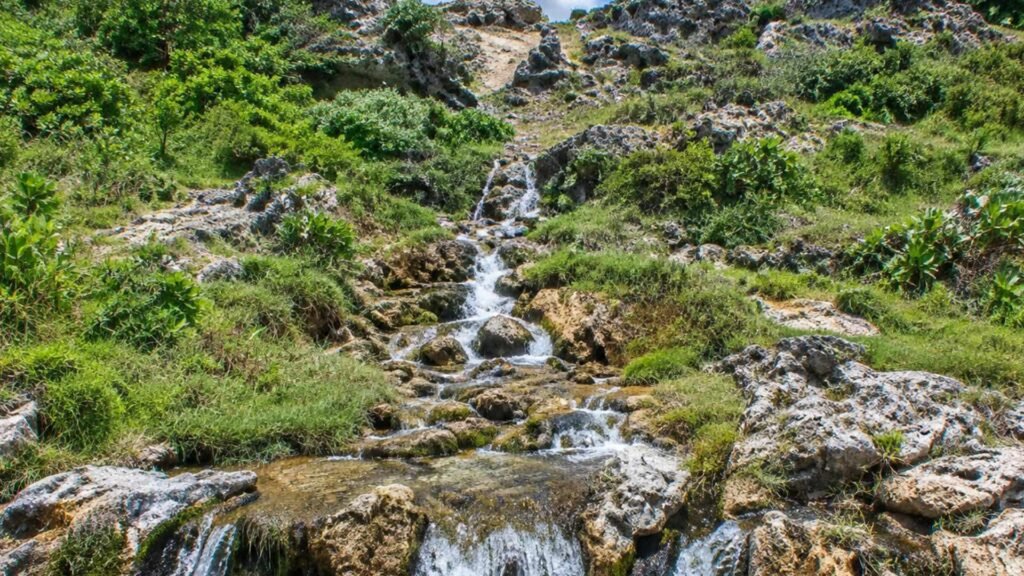
Seganing Waterfall is one of the more unusual natural attractions on Nusa Penida, an island southeast of mainland Bali known for dramatic cliffs, rugged coastlines, and challenging walking routes. Unlike waterfalls surrounded by lush jungle or reached through ordinary forest paths, Seganing is associated with a steep descent along the island’s rocky coastal cliffs, where visitors can experience a different side of Bali’s natural landscape.
For travelers who enjoy remote scenery and adventurous walks, Seganing Waterfall can be an appealing addition to a Nusa Penida itinerary. However, this destination is not suitable for everyone. The steep access route, exposed terrain, changing sea conditions, and limited facilities mean that preparation matters more here than at many popular tourist attractions.
This guide explains what to expect, how to plan your visit, when to go, and what to consider before deciding whether Seganing Waterfall belongs on your Nusa Penida trip.
Seganing Waterfall stands out because of its rugged coastal setting rather than a conventional waterfall experience. The surrounding landscape features steep limestone cliffs, ocean views, and rocky terrain that reflects the wilder character of Nusa Penida.
The attraction is sometimes described as a hidden waterfall, but visitors should not imagine a large waterfall with an easy viewing platform, landscaped gardens, or extensive visitor facilities. The appeal lies in the remote atmosphere and the challenging route toward the coast.
Several characteristics make this destination different from more accessible attractions on the island:
A steep coastal approach: Reaching the waterfall involves descending a challenging cliffside path.
Dramatic ocean scenery: The surrounding cliffs provide a sense of the scale and ruggedness of Nusa Penida’s coastline.
A more adventurous experience: The walk requires attention, physical ability, and suitable footwear.
Limited infrastructure: Visitors should prepare for a relatively undeveloped natural attraction rather than a fully managed sightseeing complex.
The most important consideration is that the journey itself is a significant part of the experience. Travelers should assess the access conditions before committing to the descent.
Seganing Waterfall is located on the western side of Nusa Penida, an island in Klungkung Regency, Bali, Indonesia.
Nusa Penida is separated from mainland Bali by the Badung Strait and is commonly reached by fast boat from Sanur. Once on the island, visitors travel by road to individual attractions, many of which are spread across hilly terrain.
The western part of Nusa Penida is also known for coastal destinations such as Kelingking Beach, Broken Beach, and Angel’s Billabong. These places are often combined into a sightseeing route, although Seganing Waterfall requires additional consideration because its access conditions differ from those of ordinary viewpoints.
Do not assume that two attractions are close simply because they appear near each other on a map. Narrow roads, bends, uneven surfaces, and local traffic can make journeys slower than expected.
Most independent travelers begin their journey at Sanur Harbour on mainland Bali. Fast boats operate between Sanur and Nusa Penida, with journey times commonly around 30–45 minutes, depending on the service and sea conditions.
Allow additional time for check-in, boarding, and transfers between the harbour and your accommodation or sightseeing destinations.
Boat schedules, ticket prices, and departure arrangements can change, so confirm the details with your chosen operator before travelling.
After arriving on Nusa Penida, you can continue by private car with a local driver or use a scooter if you are an experienced and confident rider.
A private car is generally the more comfortable option for travelers unfamiliar with the island’s roads. It also allows you to plan several sightseeing stops without having to navigate every junction yourself.
Driving times depend on your starting point, road conditions, and the day’s itinerary. Rather than relying on an exact estimate, ask your driver to confirm the current route and allow a reasonable buffer.
The final approach is the most important part of the visit. The route associated with Seganing Waterfall is steep and can involve exposed sections where secure footing is essential.
Before beginning, check whether the path is open and safe. Look for loose stones, damaged steps, slippery surfaces, and areas without reliable handholds.
If conditions appear unsafe, do not continue simply because you have already travelled to the location. Turning back is a sensible decision, especially when the path is wet or the sea is rough.
Yes. Seganing Waterfall is considerably more demanding than a typical roadside attraction or scenic viewpoint on Nusa Penida.
The steep descent is the main challenge. Walking down can place considerable pressure on the knees, while climbing back up requires stamina and balance. Uneven surfaces may also make the route difficult for visitors who are uncomfortable with heights.
Your experience will depend on the condition of the path, weather, footwear, and personal fitness. Even physically active travelers should not underestimate the exposure or assume that the route is safe in every season.
Before visiting, consider the following:
Wear closed-toe walking shoes with dependable grip.
Carry drinking water and keep your hands free while walking.
Avoid carrying bulky bags that interfere with balance.
Take your time rather than rushing to reach the bottom.
Never rely on damaged railings or unstable handholds.
Turn back if rain, slippery ground, or strong winds make the descent unsafe.
If you are travelling with children, older family members, or anyone with limited mobility, it may be better to enjoy an accessible coastal viewpoint instead.
Weather and ground conditions are particularly important at Seganing Waterfall because the access route is steep and exposed.
Bali’s drier months, often from around April to October, can provide better conditions for outdoor sightseeing. However, the actual weather varies from year to year, and dry-season dates do not guarantee a safe path.
Check recent local conditions before setting out. A route that looks manageable in dry weather can become slippery after rain.
The wetter months, broadly from November to March, can bring heavier rainfall, slippery surfaces, and rougher sea conditions.
At Seganing Waterfall, these factors are more than minor inconveniences. Rain can increase the risk of losing your footing, while strong coastal conditions can make exposed areas particularly uncomfortable.
If heavy rain has recently occurred, ask a local driver or someone familiar with the current access conditions whether visiting is advisable. Postpone the descent if the path is wet or unstable.
An early start is generally helpful when exploring western Nusa Penida. Morning departures can provide more flexibility for sightseeing and reduce the chance of having to rush later in the day.
Nevertheless, daylight alone does not make the route safe. Avoid attempting the descent late in the afternoon, when the remaining daylight may be insufficient for a careful return.
Plan your schedule around the time needed to walk down, explore, and climb back up, rather than treating the waterfall as a quick photo stop.

Entrance fees and access arrangements at smaller natural attractions on Nusa Penida can change. I cannot reliably confirm the current admission charge, operating hours, or whether any local access contribution applies specifically to Seganing Waterfall.
Check locally before visiting and carry some Indonesian rupiah in cash for small payments where necessary.
It is also worth confirming whether access is permitted on your intended date. Path maintenance, weather-related closures, and local safety decisions can affect availability.
Do not assume that a destination is officially open simply because recent photographs appear online.
Seganing Waterfall offers a different photographic setting from Bali’s landscaped gardens and temple courtyards. Its rugged terrain and coastal atmosphere can appeal to travelers who prefer dramatic natural scenery.
However, photography should never take priority over safety.
Take photographs only from stable ground away from exposed edges. Do not step onto loose rocks or lean over a cliff to improve the composition.
A wider composition can communicate the relationship between the cliff, vegetation, water, and surrounding coastline without requiring a dangerous position.
Coastal environments can expose cameras and phones to moisture, salt spray, and dust. A small protective bag is useful, particularly if you plan to walk along the rocky route.
Keep equipment secured while moving, and avoid handling a phone near exposed sections when both hands may be needed for balance.
If other visitors are using the path, allow them enough space to pass safely. Do not block narrow sections for extended photo sessions.
The best photograph is not worth creating a hazard for yourself or other people.
Because facilities may be limited, prepare before leaving your accommodation.
Recommended items include:
Drinking water in a reusable bottle.
Closed-toe shoes with good traction.
Sunscreen and a hat for exposed sections.
A lightweight rain jacket during unsettled weather.
A phone with sufficient battery for navigation and emergencies.
A small bag that leaves your hands free.
Cash for possible local charges.
Avoid bringing unnecessary equipment or large bags. Travelling light makes it easier to maintain balance on uneven ground.
Also, do not assume that toilets, food stalls, changing rooms, or other visitor facilities are available directly at the waterfall. Plan meals and bathroom breaks before travelling to the site.
A day trip from Bali is possible in principle, but whether Seganing Waterfall fits comfortably into your schedule depends on access conditions, transport arrangements, and how much time you want to spend at other attractions.
A typical western Nusa Penida sightseeing day may include:
Travel by fast boat from Sanur and continue by road toward the western part of the island. If conditions and your schedule permit, visit an accessible viewpoint before deciding whether to continue to Seganing Waterfall.
Allow time for assessing the route, completing the walk, and returning to the top. Do not schedule another attraction immediately afterward, as the descent and climb may take longer than expected.
If the path is unsafe, replace the stop with a less demanding viewpoint.
Depending on current access conditions, road traffic, and your boat departure time, you may be able to visit Kelingking Beach viewpoint or other established attractions in the western part of Nusa Penida.
Avoid trying to fit too many destinations into a single day. Boat check-in and return travel should take priority over squeezing in one final stop.
For a more relaxed trip, consider staying overnight on Nusa Penida. This gives you more flexibility if weather or road conditions affect your plans.
If you decide not to descend to Seganing Waterfall, or want to explore more of western Nusa Penida, several well-known attractions may be suitable alternatives.
Kelingking is famous for its distinctive headland and turquoise ocean views. The main viewpoint provides dramatic scenery without requiring every visitor to undertake the steep descent toward the beach.
Stay within designated viewing areas and follow local safety instructions.
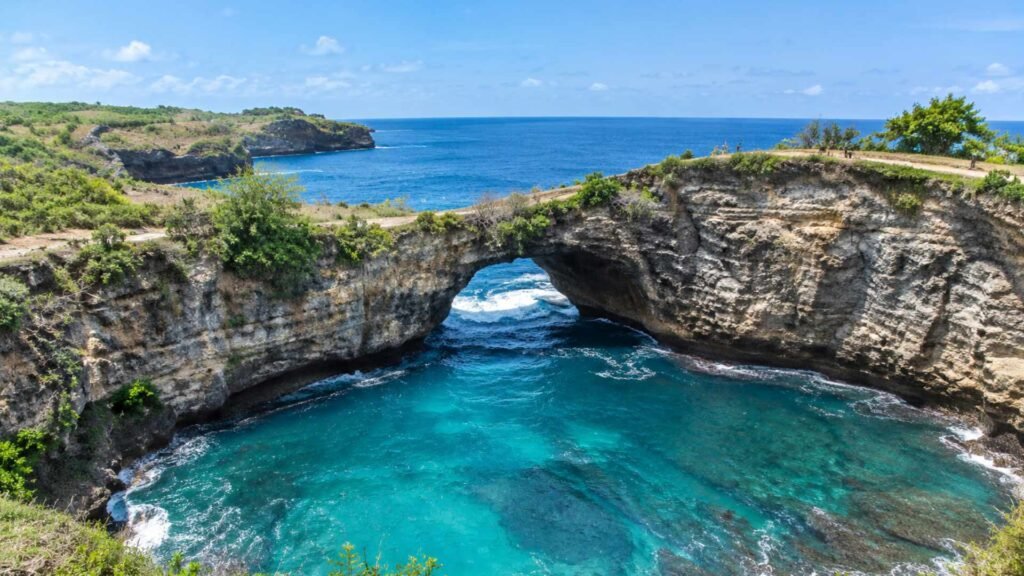
Broken Beach, also known as Pasih Uug, features a natural coastal arch surrounding a partially enclosed area of seawater. It is particularly interesting for travelers who enjoy geological formations and coastal photography.
Be careful around cliff edges, even where paths appear broad.
Angel’s Billabong is a natural rock formation along the coast. Water conditions change with the tide and ocean swell, so do not enter the water or approach exposed edges when conditions are unsafe.
Check local advice before visiting and follow any access restrictions.
These destinations can help you build a varied itinerary, but opening conditions and road access should be checked locally before departure.
From a practical travel perspective, Seganing Waterfall should be treated as a destination that requires careful planning rather than a routine sightseeing stop.
Discuss the route before leaving. Tell your driver that you specifically want to visit Seganing Waterfall. Ask about recent path conditions and whether the descent is currently considered safe.
Allow flexibility in your itinerary. Road travel on Nusa Penida can take longer than expected. A private driver can help organise the route and adjust stops, but cannot guarantee safe access to the waterfall itself.
Avoid combining too many strenuous activities. If you have already spent the morning walking on steep terrain, give yourself enough time to rest before continuing.
Keep the boat schedule realistic. Do not risk missing your return boat because you underestimated the time required to climb back up or travel to the harbour.
Choose transport that suits your experience. Visitors who are unfamiliar with Nusa Penida’s roads may find a private car and driver more convenient than navigating by scooter. Always use a reputable transport provider and agree on the itinerary in advance.
A local driver can help with logistics, but the final decision to descend should depend on the actual condition of the path and your own physical ability.
Seganing Waterfall may suit travelers who enjoy rugged coastal scenery, adventurous walks, and less conventional natural attractions.
It is potentially a good choice for:
Physically fit adults who are comfortable with steep walking routes.
Experienced hikers who understand the risks of exposed terrain.
Travelers who prefer natural landscapes to developed tourist facilities.
Photographers willing to work carefully within safe viewing areas.
It may be unsuitable for young children, people with balance difficulties, visitors with knee or mobility problems, and anyone uncomfortable with heights.
Older travelers should assess their fitness and mobility honestly rather than assuming that a short distance on a map means an easy walk.
Ultimately, there is no need to reach the waterfall itself to enjoy Nusa Penida’s coastline. A safe viewpoint can provide an equally memorable experience without the demands of a difficult descent.
Nusa Penida’s natural scenery is one of its greatest attractions, and visitors can help preserve it through considerate behaviour.
Take all rubbish back with you, avoid damaging vegetation, and stay on established paths wherever possible. Do not disturb wildlife or remove rocks and plants as souvenirs.
Respect local residents, follow posted signs, and comply with access restrictions. If the route is closed or a local authority advises against visiting, choose another destination instead.
Most importantly, avoid treating social media photographs as evidence that a location is safe. Conditions change, and an image rarely shows the entire route or the risks involved.
A responsible visit means enjoying the landscape while recognising its limits.
Seganing Waterfall is on the western side of Nusa Penida in Klungkung Regency, Bali, Indonesia. It is known for its rugged coastal setting and challenging cliffside access.
It may be worthwhile for physically fit travelers who enjoy remote natural landscapes and challenging walks. However, the steep access route is not suitable for everyone, and the experience depends heavily on current weather and path conditions.
Take a fast boat from Sanur to Nusa Penida, then travel by road toward the waterfall area. A local private driver can help organise transport and sightseeing stops, but you should confirm the current access route before setting out.
Yes. The attraction is associated with a steep and potentially exposed walking route. Uneven surfaces, slippery ground, and the climb back up can make it physically demanding.
The drier months, generally April to October, may provide more favourable walking conditions. However, check recent weather and local access information because conditions can change at any time.
Rain can make the access route slippery and increase the risk of falls. Avoid the descent when the path is wet, unstable, or affected by heavy rain. Follow local safety advice and postpone your visit when necessary.
The current entrance fee and any local access charges could not be reliably confirmed. Check with a local contact or driver before visiting, and carry some cash in Indonesian rupiah.
The steep terrain makes this attraction potentially unsuitable for young children and people with limited mobility, balance difficulties, or knee problems. An accessible coastal viewpoint may be a better alternative.
A day trip may be possible if boat schedules, road conditions, and the walking route allow sufficient time. Keep your itinerary flexible and leave enough time to return to the harbour before your boat departs.
Bring drinking water, closed-toe shoes with good grip, sun protection, a lightweight rain jacket when needed, a charged phone, and a small bag. Check the weather and current access conditions before leaving your accommodation.

After sending email information to us, we will contact you as soon as possible via email sent directly





balidriverandtour12@gmail.com
+62 812 378 153 55

Bali Driver & Tour – 2024