- We are open every : MON - SUN : 6:00AM - 7:00 PM
- balidriverandtour12@gmail.com
Bali is one of Southeast Asia’s most rewarding scuba diving destinations, but the best scuba diving in Bali is not found in just one place. The island offers very different underwater experiences, from manta rays and dramatic coral walls to wreck diving, muck diving, colorful reefs, and beginner-friendly sites.
What makes Bali especially interesting for divers is the variety within a relatively small island. You can dive around Nusa Penida for large marine life, explore the USAT Liberty wreck in Tulamben, look for tiny creatures around Padang Bai, or head toward Menjangan in northwest Bali for quieter coral reefs.
However, choosing the right dive location matters. Sea conditions, currents, experience level, accommodation location, and driving time can make a big difference to your day.
This guide explains where to find the best scuba diving in Bali, when to go, which areas suit beginners and experienced divers, and how to organize your diving days without spending half your holiday in traffic.
Scuba diving in Bali is not usually a cheap activity, especially if you need equipment rental, boat transfers, an instructor, or hotel pickup. Prices vary depending on the dive location, number of dives, certification level, and what is included in the package.
As a general planning guide, expect approximately:
These are estimated ranges for travel planning rather than fixed prices. The final cost depends on the dive operator, equipment rental, boat fees, conservation or port charges, meals, transportation, and the specific dive sites.
Before booking, ask exactly what the price includes. A cheaper package may not include equipment, hotel transfers, marine fees, or additional charges.
Yes, for regular certified scuba diving, you normally need an appropriate recognized scuba certification, such as an Open Water Diver certification.
However, you do not necessarily need a certification to try scuba diving for the first time. Bali has Discover Scuba Diving programs where a qualified instructor provides instruction and closely supervises the participant.
The important difference is that a Discover Scuba Diving experience is not the same as being a certified independent diver. The depth, dive site, supervision, and activities are restricted according to the program and operator’s requirements.
If you already have a certification, bring your certification card or digital proof if requested by the dive center. You may also be asked about your recent diving experience, particularly if you have not dived for a long time.
The price reflects more than simply getting into the water. A typical package may involve:
For this reason, compare what is included, rather than choosing the operator with the lowest advertised price.
For most travelers, the strongest dive areas are Nusa Penida, Tulamben, Amed, Padang Bai, and Menjangan. Each has a different character.
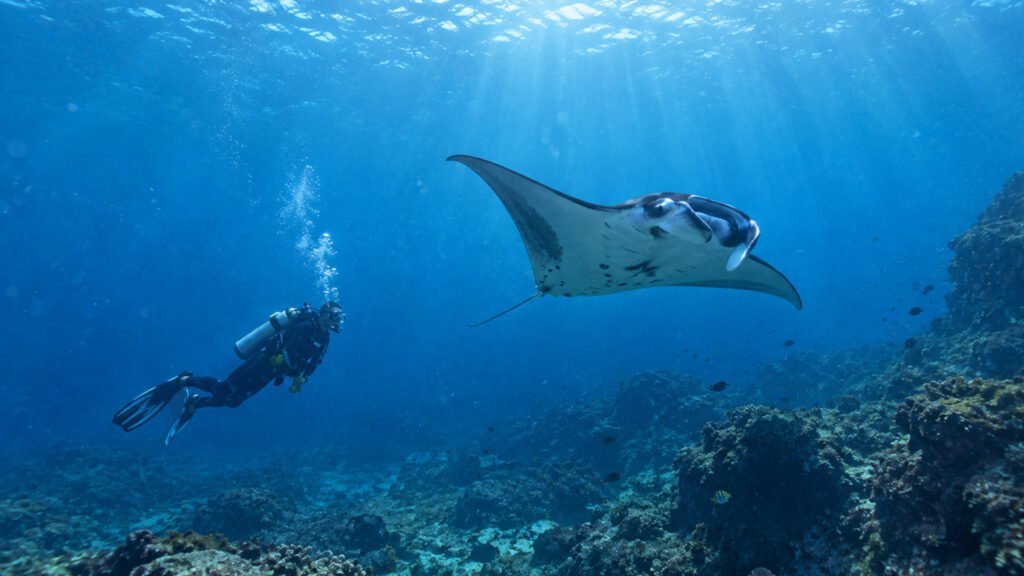
Nusa Penida is one of Bali’s most famous diving destinations, particularly for encounters with manta rays.
Popular dive areas include Manta Point and other sites around Nusa Penida and neighboring Nusa Lembongan. Manta encounters can be spectacular, but sightings are never guaranteed because these are wild animals.
Nusa Penida can also have stronger currents than some mainland Bali dive sites. Beginners should follow the dive operator’s recommendations rather than choosing a site solely because it is famous.
Best for: manta rays, experienced divers, underwater photography, dramatic scenery.
Local tip: If you are staying in southern Bali and planning a day trip, leave early. Transfers to the harbor, boat schedules, sea conditions, and traffic can turn a seemingly short excursion into a long day.
For many divers, Tulamben offers the most convenient combination of accessibility and underwater interest.
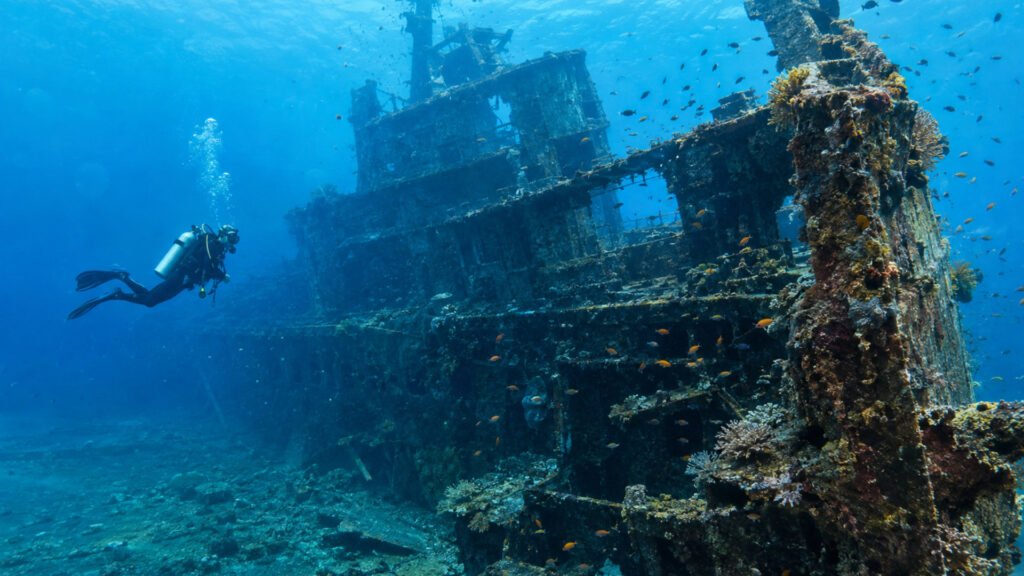
The main attraction is the USAT Liberty, a World War II-era shipwreck resting close to shore. Its location makes it unusual compared with wreck dives that require long boat journeys.
The wreck is covered with marine life, and different sections suit different experience levels. Your dive operator should determine which route is appropriate for your certification and current conditions.
Tulamben’s shore-entry format also makes it possible to do multiple dives without spending much time traveling by boat.
Best for: wreck diving, underwater photography, multiple dives, divers staying in East Bali.
Local driver tip: Tulamben is a long journey from the busy southwest. If diving is your priority, staying around Tulamben or Amed for a night or two is usually more comfortable than commuting from Seminyak or Canggu.
Amed combines diving with a quieter East Bali atmosphere.
The coastline has several dive sites, while the area itself is known for traditional fishing villages, black-sand beaches, sea views, and a slower pace than southern Bali.
Amed works particularly well if you don’t want your holiday to revolve entirely around diving. You can dive in the morning and spend the afternoon relaxing, exploring nearby villages, or enjoying the coastline.
Best for: relaxed dive trips, reef diving, beginners depending on conditions, couples, longer stays.
Photography tip: Early morning light around the Amed coastline can be beautiful. If you are carrying camera equipment, keep it protected during transfers and beach entries because conditions can be rougher than they look from shore.
Padang Bai is an important departure point for boats and is also a useful diving base.
The surrounding waters offer a mixture of reefs, marine life, and sites that can suit different experience levels. Some dives around the area can involve current, so conditions should always be discussed with your dive guide before entering the water.
Padang Bai is also convenient if you want to combine diving with an East Bali sightseeing itinerary.
Best for: varied dive sites, day trips, experienced divers, combining diving with East Bali travel.
Menjangan Island is located in northwest Bali inside the West Bali National Park area.
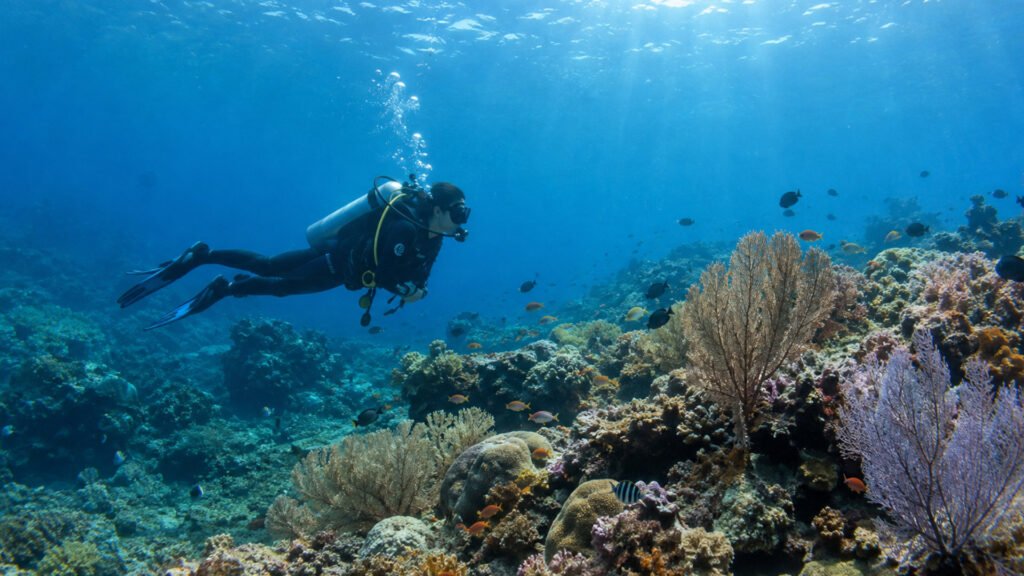
The journey is longer from the island’s main tourist centers, but that distance is part of its appeal. The underwater environment is known for clear water, coral reefs, and wall-diving opportunities.
Menjangan is worth considering if you prefer a quieter experience and are willing to spend more time traveling.
Best for: reef diving, underwater photography, quieter dive trips, experienced travelers who want to explore another side of Bali.
Not every famous Bali dive site is suitable for every diver.
If you are newly certified or planning your first scuba experience, ask operators about sheltered sites with suitable conditions.
Amed, Padang Bai, and selected sites around Bali can be appropriate depending on the day’s sea conditions and your instructor’s assessment.
For a first dive, calm conditions and a good instructor are more important than visiting the most famous underwater attraction.
Certified divers have more options, including the Liberty wreck, deeper reef sites, and sites around Nusa Penida.
Your certification level, recent diving experience, and comfort with currents should determine which sites you choose.
Experienced divers may prefer Nusa Penida’s more challenging conditions, deeper sites, drift diving, or specialized dives around East Bali.
Always treat local current information seriously. Conditions can change quickly, and a site that was comfortable on a previous day may behave differently.
Bali can offer diving throughout much of the year, but conditions vary by location and season.
Generally, the dry season from around April to October often provides favorable conditions for many outdoor activities. However, Bali’s weather is not perfectly predictable, and individual dive sites can have different conditions.
The rainy season can bring reduced visibility at some locations, especially after heavy rainfall and runoff. On the other hand, diving conditions can still be excellent on individual days.
For Nusa Penida, water temperature and marine-life movements also influence what you may encounter.
If your holiday is flexible, ask your dive operator for current visibility, waves, wind, and site conditions rather than relying only on a monthly weather chart.
Transportation is one of the most overlooked parts of planning a Bali diving holiday.
Approximate road travel times can vary considerably because of traffic and road conditions:
These are planning estimates, not guaranteed journey times.
Traffic around southern Bali can be particularly unpredictable. If you have a morning dive, arrange transport the previous day when possible rather than assuming you can make an early departure after a late night.
A private driver in Bali is useful for mainland transfers because you can leave at a suitable time, carry dive equipment comfortably, and avoid navigating unfamiliar roads yourself.
For boat-based diving around Nusa Penida, your mainland transfer needs to be coordinated with the operator’s harbor departure time.
If diving is only one activity during your holiday, staying in Ubud, Seminyak, Canggu, or Nusa Dua can work.
However, if you plan to make several dives around Tulamben or Amed, staying in East Bali makes much more sense.
You save hours of driving and have more time for diving and relaxing.
A practical Bali itinerary could look like this:
Days 1–3: Ubud and cultural sightseeing
Days 4–6: Amed or Tulamben diving
Days 7–8: South Bali beaches and Uluwatu
Days 9–10: Nusa Penida or a relaxed beach stay
This approach is generally more comfortable than repeatedly crossing the island.
A typical diving day depends on the operator and site, but it may include:
Boat dives and shore dives have different schedules.
If you are planning several diving days, avoid packing every day with sightseeing. Diving is physically demanding, and leaving enough time to rest makes the holiday more enjoyable.
Choose a reputable dive center and provide accurate information about your certification and recent diving experience.
Before diving, ask about:
Do not feel pressured to enter the water if conditions exceed your comfort level.
Also remember standard scuba safety principles, including appropriate surface intervals and avoiding flying too soon after diving. Your dive operator or instructor should advise you on the required interval based on your diving profile.
A good Bali diving day usually requires less than travelers expect.
Bring:
If you use prescription masks, bring your own.
For underwater photography, use reliable waterproof equipment and secure it properly during boat and shore transfers.
A long transfer followed by diving and another long drive can leave you exhausted.
A famous site may not be the best site for your experience level or the day’s conditions.
Nusa Penida is particularly important here. Listen to your dive guide.
Traffic can dramatically increase travel times between South Bali and East Bali.
Give yourself time to rest instead of scheduling an ATV ride, long temple tour, or demanding hike immediately after multiple dives.
Yes, but choose the combination carefully.
For example, diving in East Bali can potentially be combined with nearby attractions on a separate day, such as Tirta Gangga, Taman Ujung, or traditional villages.
Rather than rushing between attractions and dive sites, I recommend separating the diving day from the sightseeing day whenever possible.
A private driver is particularly useful for this style of trip because you can create a flexible East Bali itinerary around your accommodation and diving schedule.
Scuba diving can be suitable for families and older travelers when participants meet the relevant medical, training, and fitness requirements.
However, non-divers should not be left with a poorly planned day.
If some members of your group dive while others do not, arrange alternative activities such as beach relaxation, village visits, cafés, or sightseeing.
For senior travelers, minimize unnecessary long drives and choose accommodation closer to the dive area. Comfortable transport and sufficient rest can make a significant difference.
If you are staying around Amed, Tulamben, or Padang Bai, consider allowing another day for sightseeing.
Potential additions include:
Check current access, weather, and attraction conditions before visiting.
Temple visits also require respectful clothing and behavior. A sarong and appropriate clothing are commonly expected at Balinese temples, although specific rules can vary.
The best scuba diving in Bali depends on what you want to see and how you want to travel.
Choose Nusa Penida for manta rays and more challenging conditions. Choose Tulamben for the famous Liberty wreck. Choose Amed for a relaxed diving holiday. Choose Padang Bai for variety and convenient access to East Bali. Choose Menjangan if you want quieter reefs and are willing to travel farther.
Most importantly, don’t choose your dive site based only on Instagram photos. Consider your certification, current conditions, accommodation, travel time, and how much energy you want to spend moving around Bali.
If you need comfortable mainland transportation between your hotel, dive center, airport, and sightseeing destinations, a private Bali driver can make the logistics much easier. You can also combine diving with a Bali Day Tour around East Bali without having to manage unfamiliar roads yourself.
For travelers arriving in Bali and heading directly to their accommodation, arranging a Bali Airport Transfer in advance can also make the first day smoother.
The best area depends on your interests. Nusa Penida is well known for manta rays, Tulamben for the USAT Liberty wreck, Amed for relaxed reef diving, Padang Bai for variety, and Menjangan for quieter coral reefs.
Yes. Bali has dive sites suitable for beginners, although suitability depends on the day’s conditions and the diver’s training. A qualified instructor or dive guide should select appropriate sites.
There is no single perfect month for every dive site. Conditions vary by location and weather. The dry season generally offers favorable conditions for many activities, but always check current sea and visibility conditions with your dive operator.
Some sites and conditions may be suitable for newer divers, but Nusa Penida is also known for currents. Your certification, experience, and the conditions on the day should determine whether a particular site is appropriate.
Yes. Tulamben is especially attractive to divers interested in wreck diving because the USAT Liberty is accessible from the shore and supports different dive routes.
Travel time can vary with traffic and the exact starting point, but Tulamben is generally much more convenient from Ubud than from Bali’s busy southwest. Allow several hours when planning the journey.
It is possible, but it is usually better to avoid an overly packed schedule. Diving requires preparation and recovery time. If sightseeing is important, consider using a separate day for attractions.
Amed is a good choice if you want a combination of diving, restaurants, beaches, and a relaxed coastal atmosphere. Tulamben is particularly convenient if the Liberty wreck is your main diving objective.
Absolutely. Choose accommodation where non-divers have access to beaches, cafés, sightseeing, or other activities. A private driver can also help organize separate mainland activities for non-diving family members.
You do not necessarily need one, but a private driver can be useful for mainland transfers, especially when traveling from South Bali to East or West Bali with diving equipment. For boat-based trips, coordinate your transport carefully with the dive operator’s departure schedule.

After sending email information to us, we will contact you as soon as possible via email sent directly





balidriverandtour12@gmail.com
+62 812 378 153 55

Bali Driver & Tour – 2024